
Elementary · Curriculum by Grade
Five years, one story unfolding.
From fairy tales in first grade to ancient Greece in fifth, every year's stories, lessons and projects are chosen for exactly who children are at that age. Here are some of the highlights.
← Back to the Elementary overview“Is the world good?”
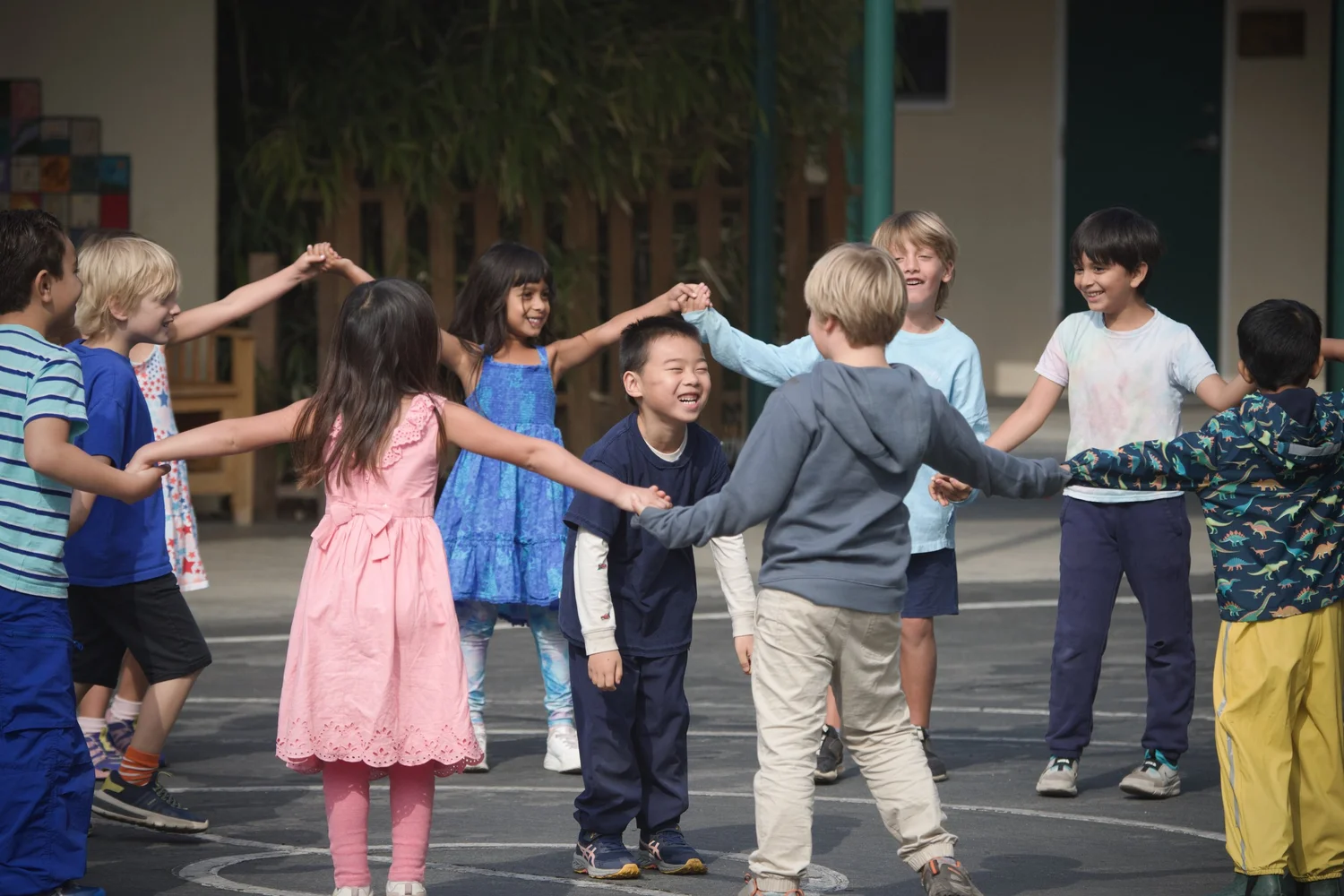
First grade sets the tone for all the years of classroom learning to come. Knowledge comes alive through stories, movement and art, and timeless fairy tales reassure children that the world is trustworthy: good triumphs, bravery overcomes fear, and help comes to those who help others.
Main lessons
HighlightsLetters from pictures
Each consonant arises from an image, an S from a snake, introduced through story, speech, drawing and movement.
Vowels & first reading
Vowels are met through their moods and feelings, and children begin by reading the verses and stories the class wrote together.
The quality of numbers
Numbers 1 to 12 discovered in the world around us: the "oneness" of the sun, the "twoness" of night and day.
The four processes
Addition, subtraction, multiplication and division come to life through characters, circle games, drawings and manipulatives.
Form drawing
Straight and curved lines are walked as a class and traced in the air before they ever reach the paper.
Color stories
Wet-on-wet watercolor and beeswax modeling, where color is first experienced as a mood.
By the end of the year
- Reading: Familiar verses, then simple sentences
- Writing: Words and sentences, together and on their own
- Math: Addition and subtraction facts to 20; counting by 2s, 3s, 4s, 5s and 10s
- Numbers: Written correctly up to 100
Through the year
- Daily mental math told as stories
- Tongue twisters, poems and verses recited from memory
- A first class play
Growing up
Children are moving from mostly physical growth into a time when social and emotional needs grow stronger. Rhythm, imagination and close relationships lay the foundation for joyful, confident learning.
“Who will I choose to be?”
Second graders still live in the imagination of early childhood, but they're waking up to their own individuality and to others'. Stories of noble, generous figures sit alongside fables of tricksters and fools, so children can hold life's contrasts in their imagination and find their own way between them.
Main lessons
HighlightsStories of noble lives
Legends of courage, generosity and service to others, alongside deepening phonics and more independent writing.
Animal fables
Tricksters and fools teach discernment, empathy and humor, as small reading groups build fluency.
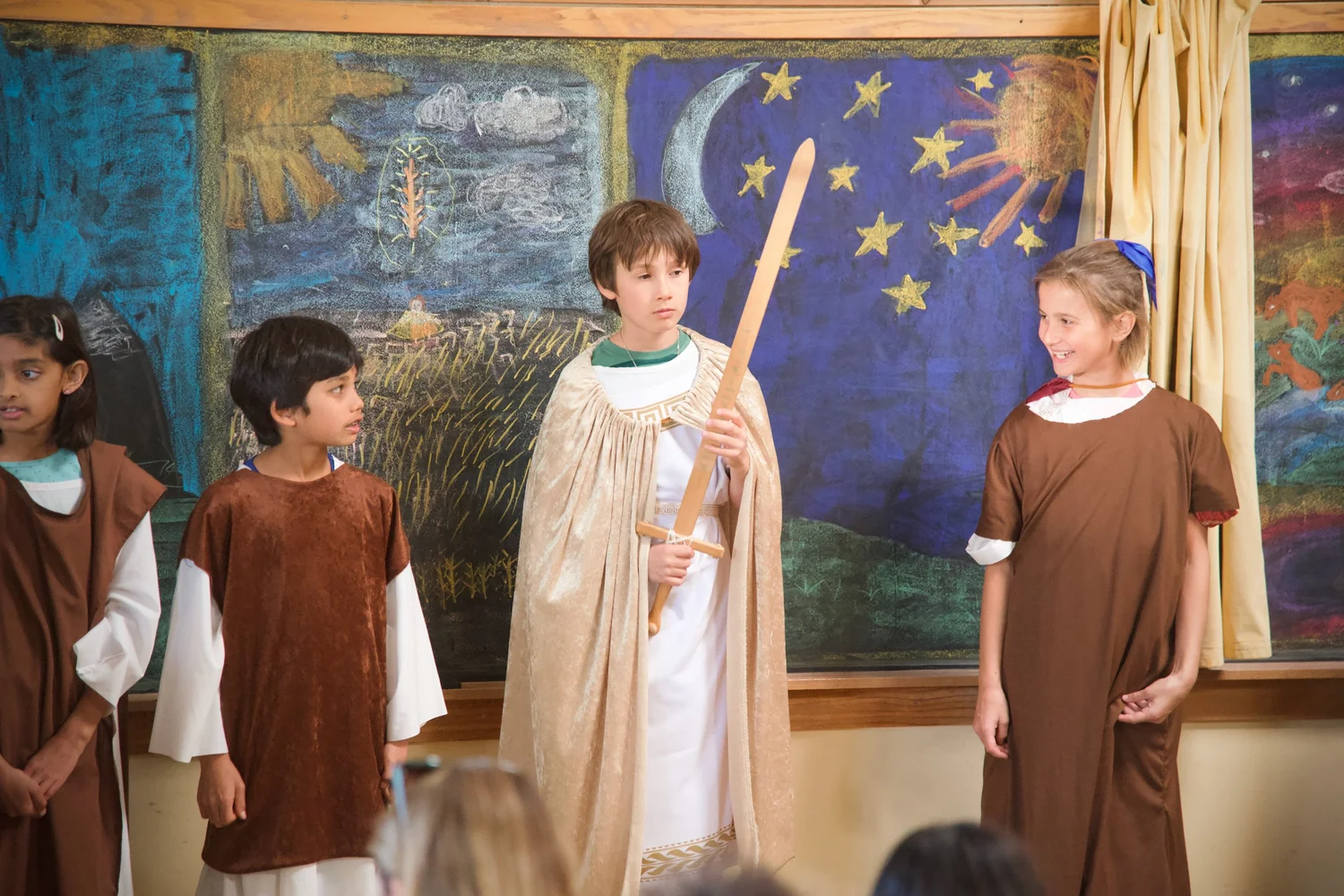
The class play
Story, speech and movement come together in a shared performance that builds confidence and cooperation.
Math in columns
From horizontal to vertical addition and subtraction, and the times tables learned through movement and rhythm.
Place value
Ones, tens, hundreds and thousands, made concrete through imaginative pictures.
Borrowing & regrouping
Understanding why the procedures work, not just how, as stories give way to mathematical language.
By the end of the year
- Reading: Growing fluency and independent reading
- Writing: Upper and lowercase, sentence basics, and possibly cursive
- Math: Regrouping with three-digit numbers; times tables for 2–7 and 10
- Numbers: Reading and writing into the thousands
Art & making
- Mirror-image form drawings that build balance and symmetry
- Paintings of seasons and story scenes
- Crayon shading and beeswax modeling
Growing up
If first grade is a circle, second grade is two parallel lines. Children notice kindness and unkindness, truth and mischief, and the year's stories help them practice choosing well.
“How do we live on the earth?”
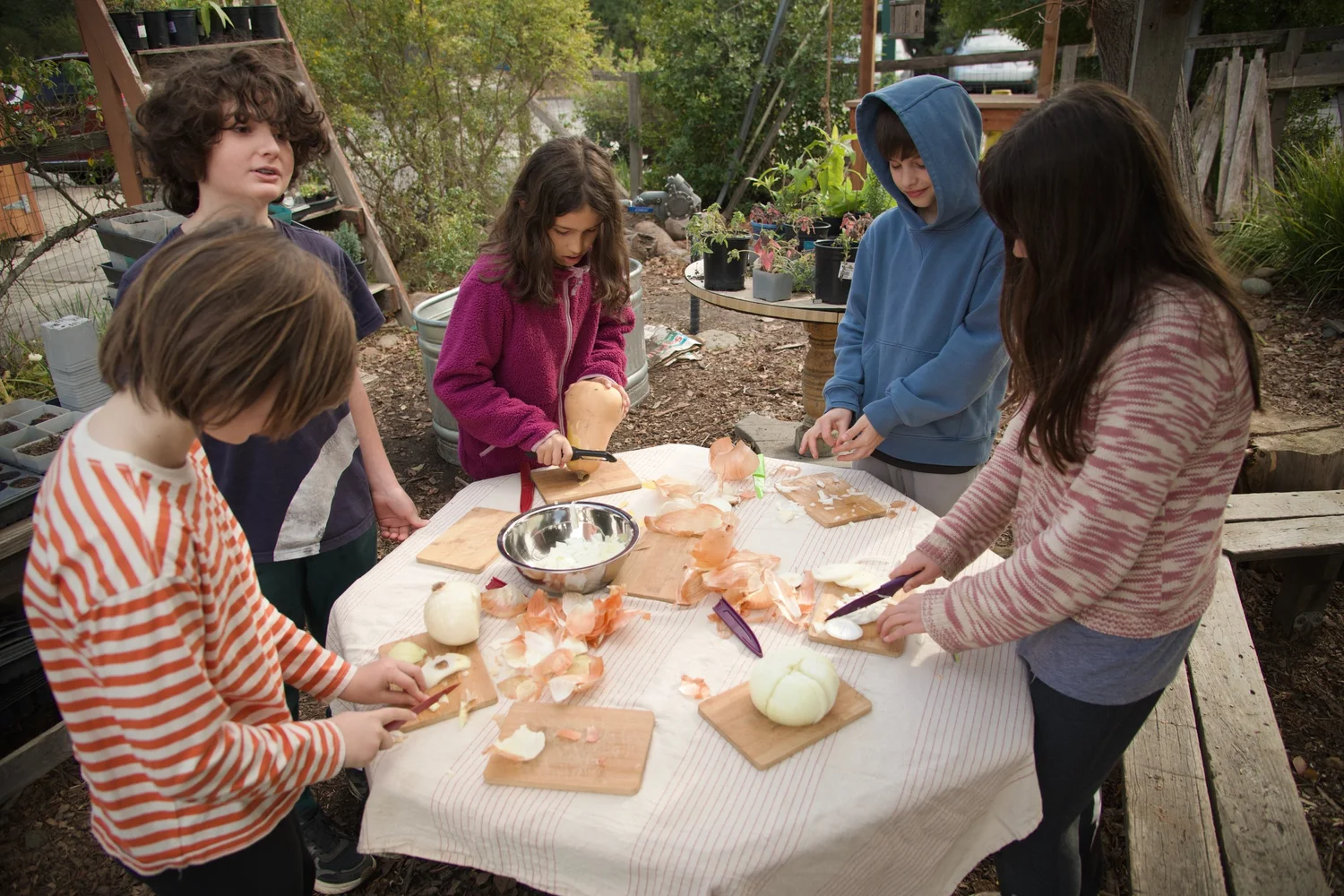
Around age nine, children begin to feel more separate from the world around them, a shift that brings both wonder and uncertainty. Third grade answers with real, practical work: farming, cooking, building and measuring, so children find their footing and their confidence.
Main lessons
HighlightsLiving on the earth
Shelters, fibers and clothing, farming and cooking. The shelters project is a long-standing WSP tradition.
Measurement
From ancient cubits to feet, cups and pounds, with acres and bushels from the farm, all measured with real tools.
Time & money
Ancient timekeeping, the seasons and the analog clock, and the history of money from barter to coins.
Stories from the Tanakh
From creation through the kings, with Jewish holidays, festivals and arts honored along the way.
Parts of speech
Naming, doing and describing words, discovered through imagination, plus cursive and first reports.
The class play
A play drawn from the year's studies, often with individual speaking parts for the first time.
By the end of the year
- Math: All times tables through 12; multi-step problems
- Measuring: Length, volume and weight, with rulers, tape measures and kitchen tools
- Time: Telling time on an analog clock
- Language: Nouns, verbs, adjectives and adverbs used correctly
Art & making
- Dioramas of homes and shelters
- Clay and beeswax modeling
- Paintings of the land in a warm palette
Growing up
Through meaningful work, archetypal stories and the steady guidance of adults they trust, children step more fully and confidently into the world.
“Where do I stand?”
Fourth graders are leaving the dreamy world of the early grades and beginning to stand more firmly in themselves, with a new sense of individuality, curiosity and responsibility. The year nurtures that independence while keeping them held in the warmth of the class.
Main lessons
HighlightsNorse myths & the Kalevala
Legends of strong personalities and clear consequences, retold, written about and brought to life.
Human & animal
What makes us human, and what makes each animal remarkable, ending in an independent animal research project.
Local & California
Bird's-eye maps of Los Altos, the Bay Area and California, the land's indigenous peoples, and hikes and museum trips.
Fractions
The whole is broken into parts, just as children feel themselves becoming separate, through games, music and hands-on work.
Grammar & the paragraph
All nine parts of speech, sentence diagramming, book reports and the first fountain pen.
The class play
Individual roles, and a bigger hand in running the production.
By the end of the year
- Writing: Cohesive paragraphs and book reports with a personal opinion
- Grammar: All nine parts of speech and four sentence types
- Math: The four processes with fractions; long division with two-digit divisors
Out in the world
- Hikes at Rancho San Antonio
- Museum visits, such as the Oakland Museum of California
- An overnight California geography trip, often two to four nights
Art & making
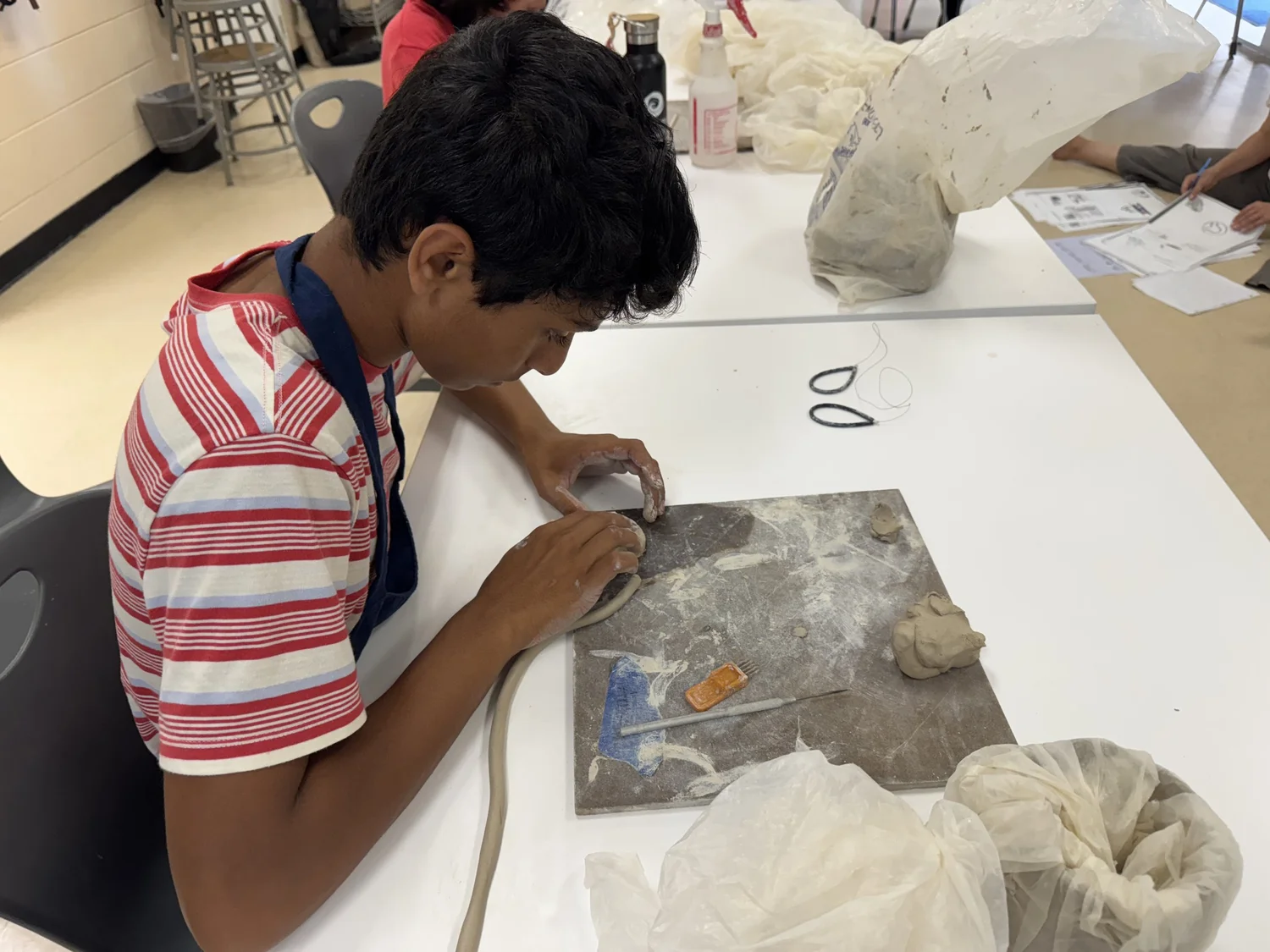
Intricate braided and knotted form drawings, often Celtic and Norse borders for main lesson books, plus clay animals and light-and-dark painting.
“Where did we come from?”
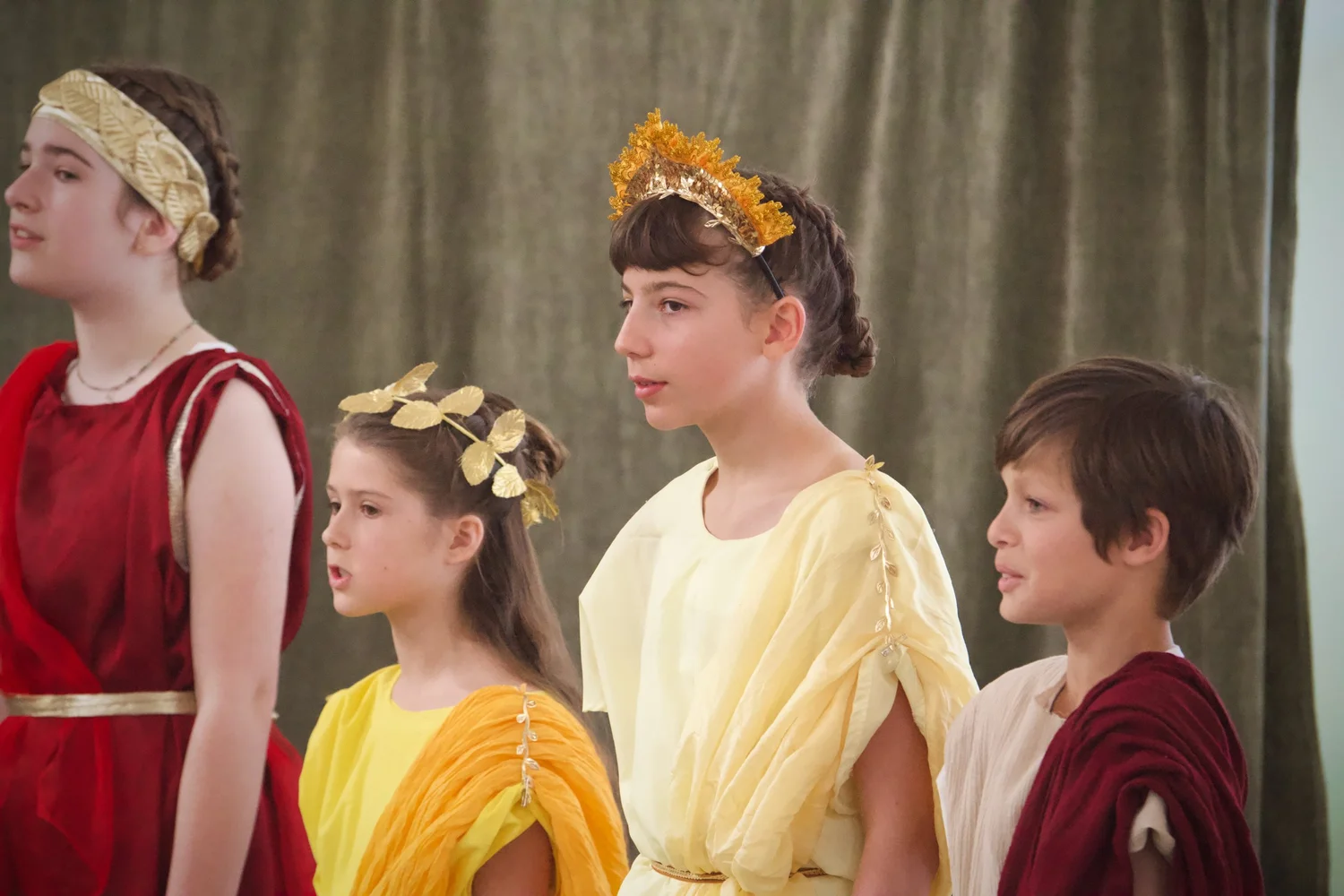
Fifth grade is often called the golden age of childhood. Children stand at a point of balance between the imaginative early years and the changes of adolescence, open to ideals of truth, beauty and strength, and eager to learn more on their own.
Main lessons
HighlightsAncient cultures
India, Persia, Mesopotamia, Egypt and Greece, as myth gives way to recorded history.
Botany
From algae, mosses and ferns to flowering plants, observed closely, drawn and described.
North America
Regions, peoples and legends of the continent, ending in a research project on a state, park or landmark.
Freehand geometry
Circles, angles, triangles and polygons drawn by hand with surprising precision, before tools are introduced.
Decimals & metric
The bridge between fractions and decimals, put to work with metric measurement.
The class play
Individual speaking roles and an increasingly active part in staging the production.
By the end of the year
- Writing: Multi-paragraph essays with clear topic sentences
- Grammar: Active and passive voice, and advanced punctuation
- Speaking: Oral reports based on their own research
- Math: Fractions, decimals and geometric figures
Art & making
- Pastel drawing and botanical studies
- Clay artifacts like cuneiform tablets and canopic jars
- Designs from ancient cultures in main lesson books
Growing up
A new harmony between mind and body shows up as a gentle thirst for independent learning, and a readiness for the bigger questions of middle school.
How we see progress
Clear goals for every year, and a full picture of every child.
Main lesson books
Children create their own illustrated book for every block, a record of what they've learned and how carefully they've worked.
Learning goals
Each grade has clear goals in language arts, math and the arts, from letter sounds in 1st grade to multi-paragraph essays in 5th.
Conferences
Parents and teachers meet twice a year, and whenever else it's needed.
Narrative reports
A detailed end-of-year report describes each child's growth, not just a set of grades.
Questions?