
Elementary School
Developmentally-Aligned Learning for Grades 1–5
In the elementary years, the child’s capacities for imagination, emotion, and cognition are actively forming. At WSP, the curriculum is designed to meet the child at each stage of development with content that engages their sense of wonder, supports the healthy unfolding of thinking, feeling, and willing, and gradually cultivates the academic capacities needed for later years.
The Class-Teacher Relationship
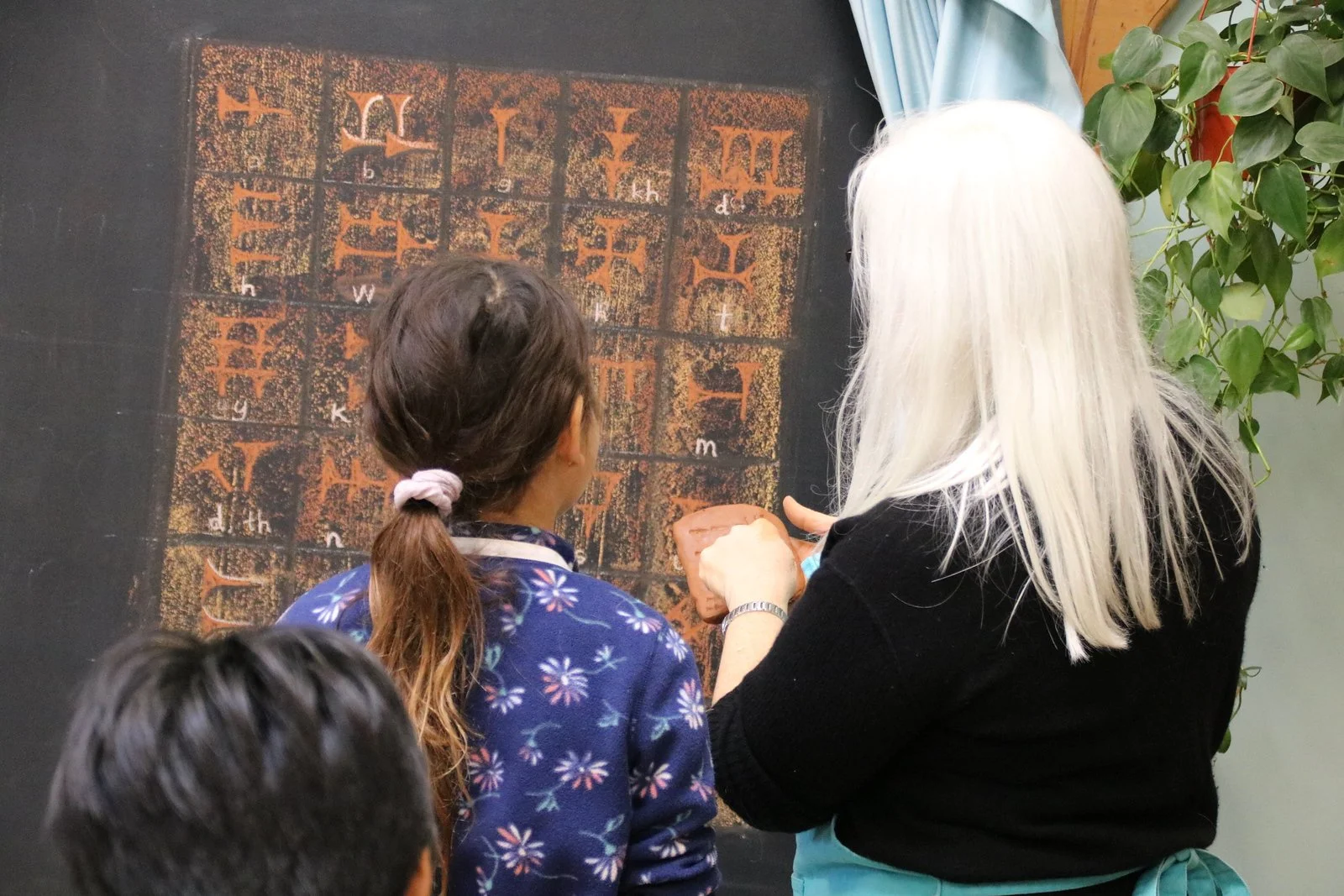
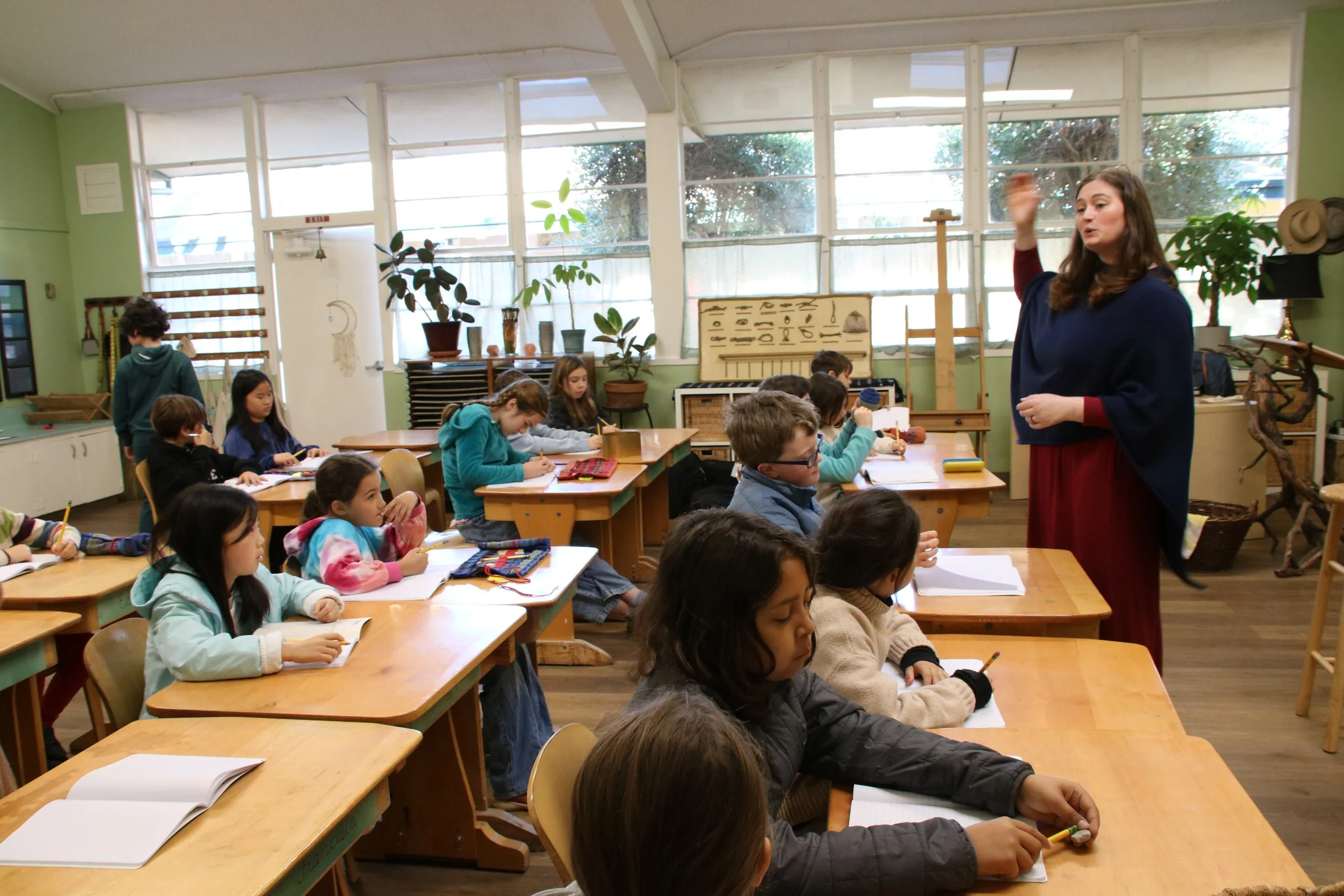
Beginning in Grade 1, students are guided by a class teacher who remains with the class for multiple years. This long-term pedagogical relationship fosters continuity, trust, and a deep understanding of each student’s growth. The teacher becomes attuned to the class as a whole and to each individual child, enabling instruction that is both developmentally appropriate and responsive.
In an era marked by constant change, the sustained presence of the class teacher offers the child a foundation of security and rhythm.
Main Lesson:
Depth Through Immersion
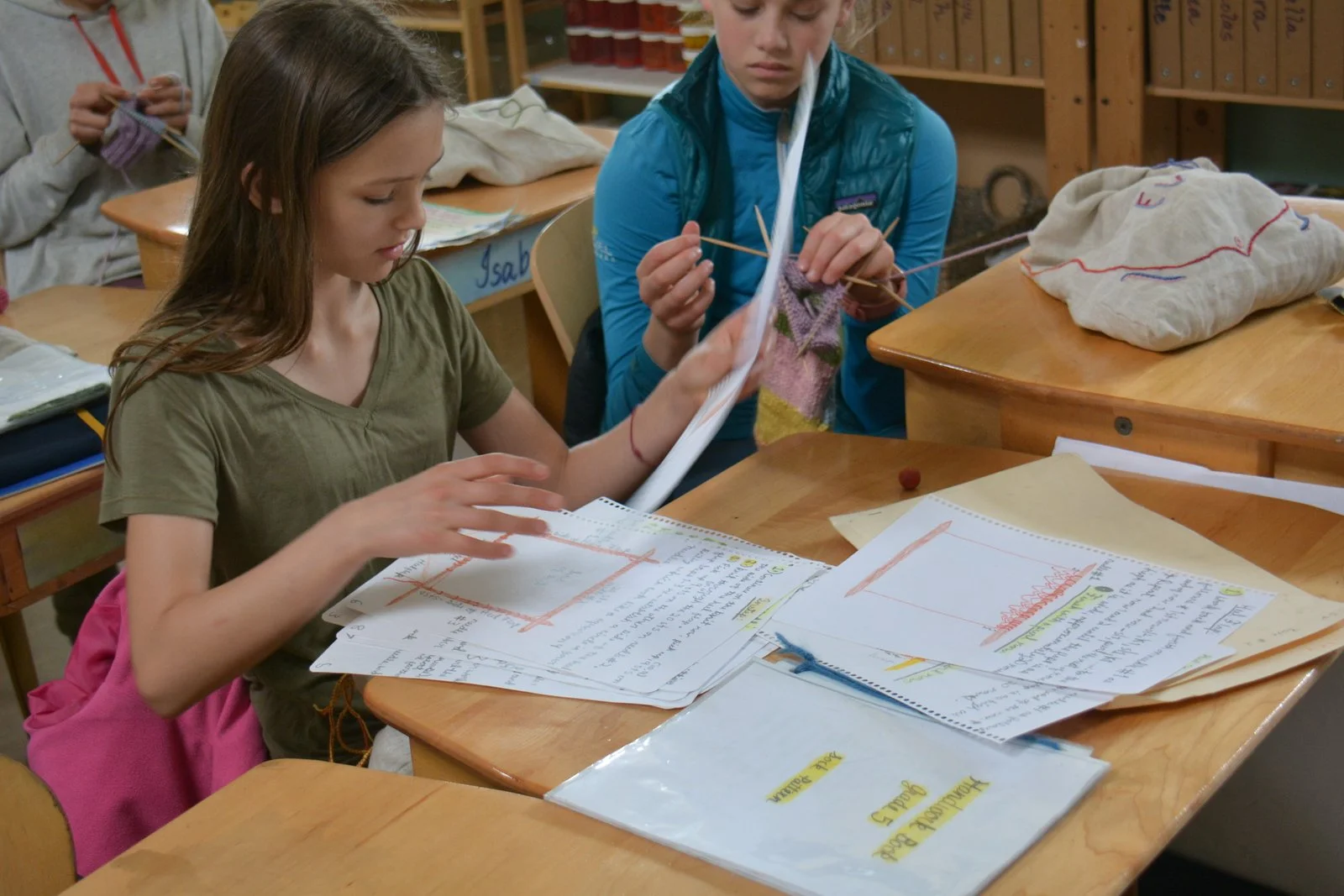
Each school day begins with a two-hour main lesson block, during which one subject is explored over several weeks. Subjects may include form drawing, arithmetic, local geography, botany, or history. This concentrated approach allows for integrated, multi-modal learning that incorporates:
Recitation and storytelling
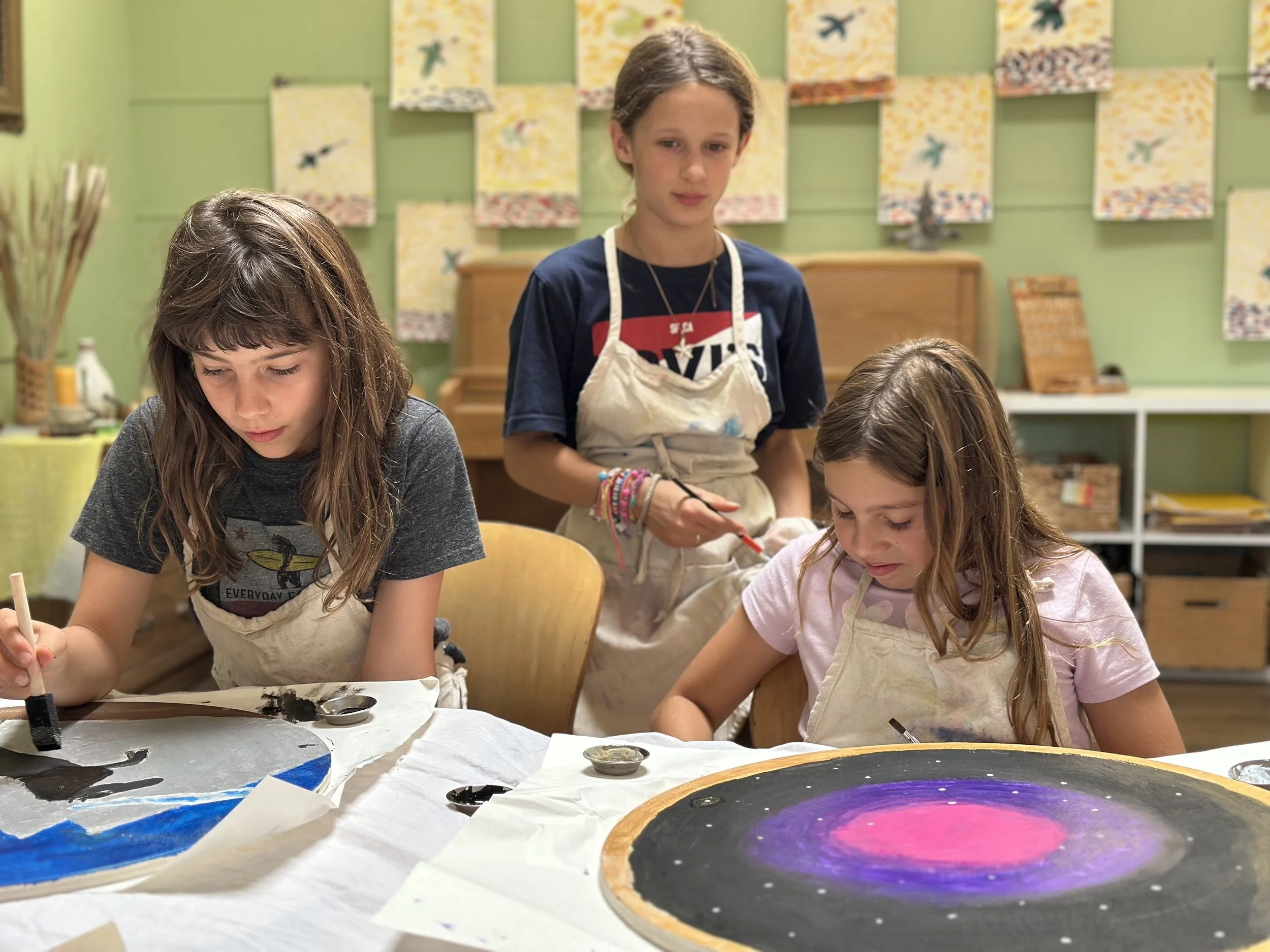
Drawing and painting
Writing and composition
Movement and drama
Through this method, knowledge is not acquired solely through memorization but through artistic engagement and lived experience. The result is deep retention and internalized understanding.
Language Arts:
Literacy Through the Spoken and Written Word
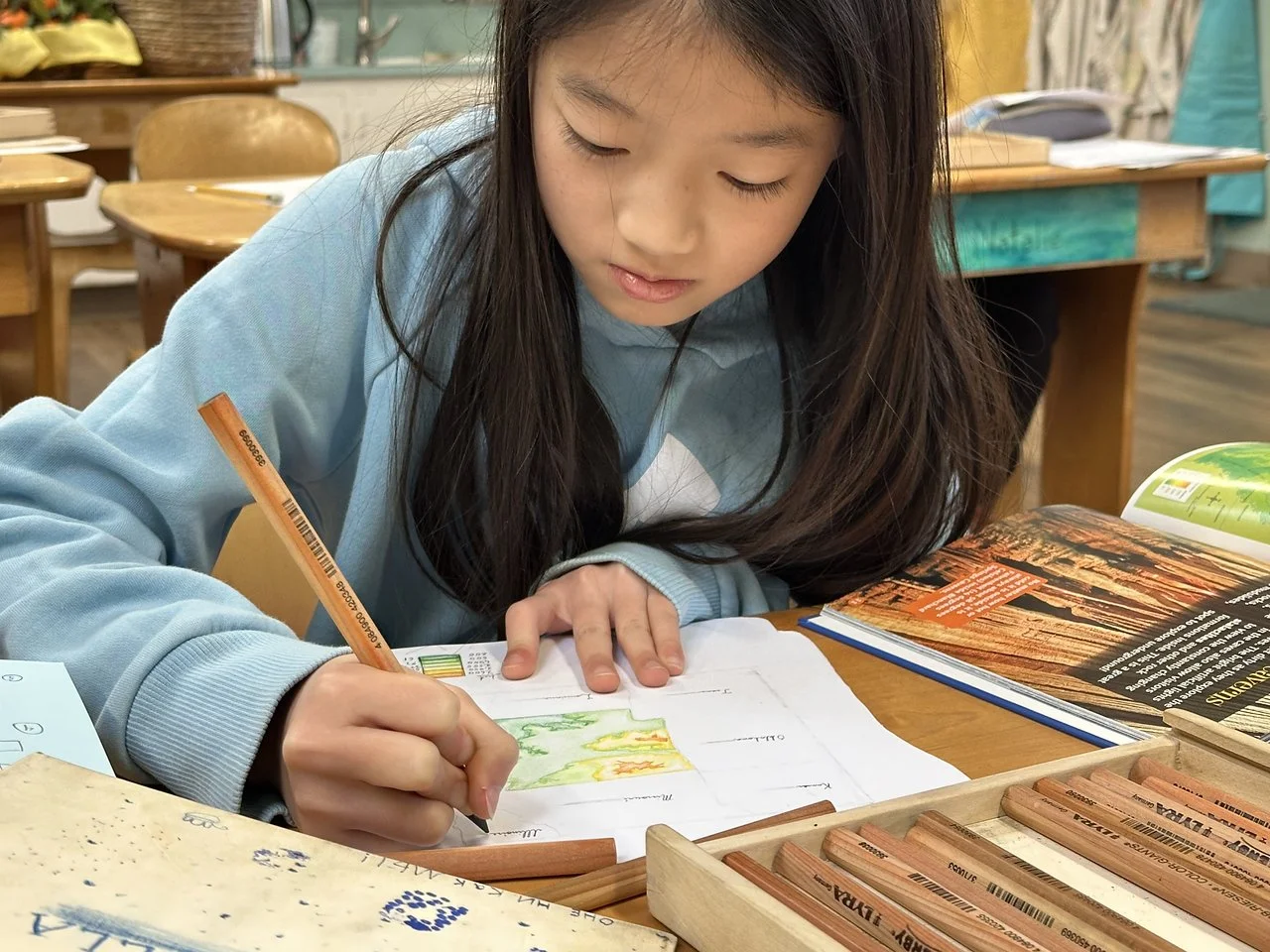
Language arts in the early grades arises out of the oral tradition. Stories, whether fairy tales, fables, legends, and biographies, form the foundation for reading and writing. Children first encounter language through:
Oral storytelling and recitation
Visual sequencing and illustration
Cursive handwriting and calligraphy
Journaling and original composition
Phonics and grammar are introduced contextually. The emphasis remains on cultivating a meaningful relationship with language, at a pace aligned with each child’s readiness.

Mathematics:
Number as Pattern and Movement
Mathematics is introduced through rhythm, gesture, and form. Counting games, clapping patterns, and stepping rhythms support the internalization of number sense before abstract representation is introduced. Students explore:
The four mathematics processes through story and movement
Times tables through rhythm and song
Place value and number bonds with manipulatives
Geometric forms through drawing and beeswax modeling
Mathematics becomes an embodied language that arises out of the will before it is approached intellectually.
Science:
Observation Before Abstraction
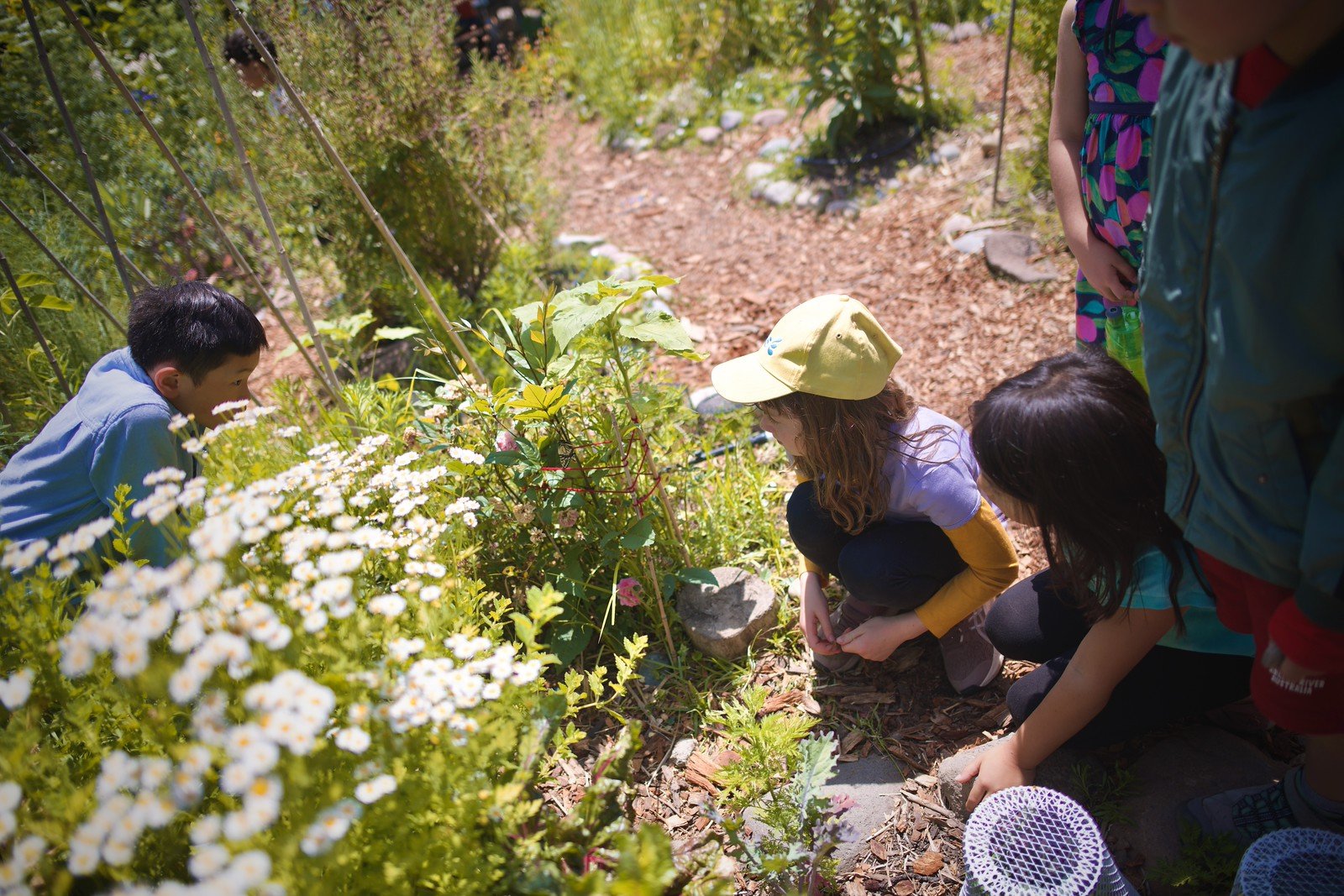
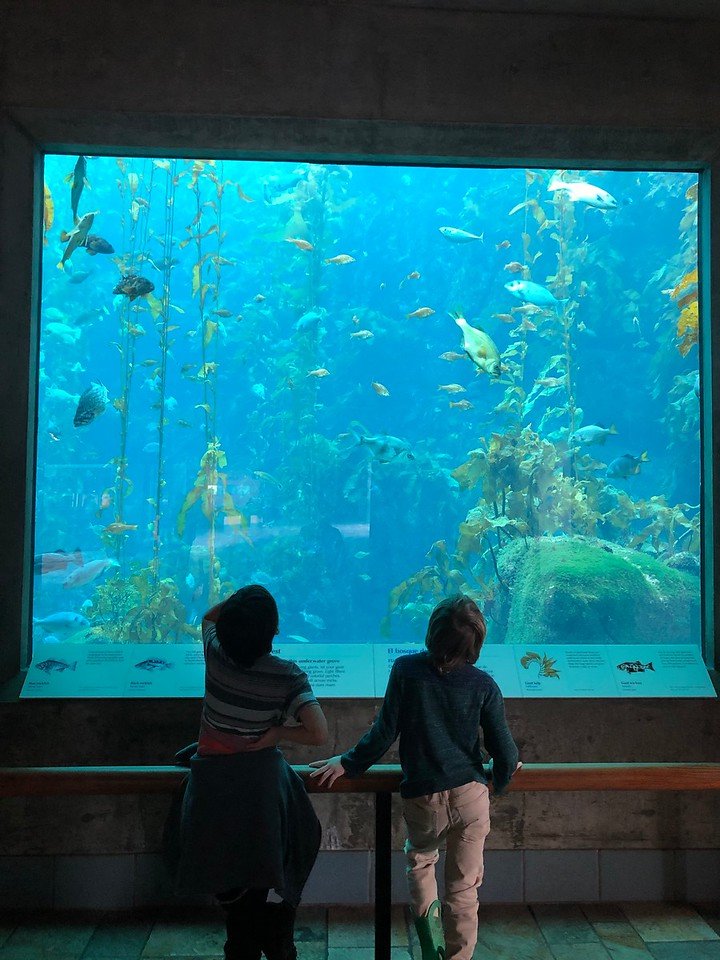
Scientific understanding begins with direct experience. Students engage with the natural world through the seasons, observing patterns and changes without premature abstraction. Science lessons include:
Cultivating plants and caring for animals
Observing the weather and moon phases
Constructing simple shelters and tools
Exploring the human and animal form through drawing and modeling
Phenomena are first encountered through the senses, then revisited through discussion and artistic representation, laying the groundwork for later analytic thinking.

Special Subjects: Rooted in the Senses and the Will
-
![An teacher and three children sitting together, knitting with yarn in a room with bookshelves, a potted plant, and a cart in the background.]()
Handwork
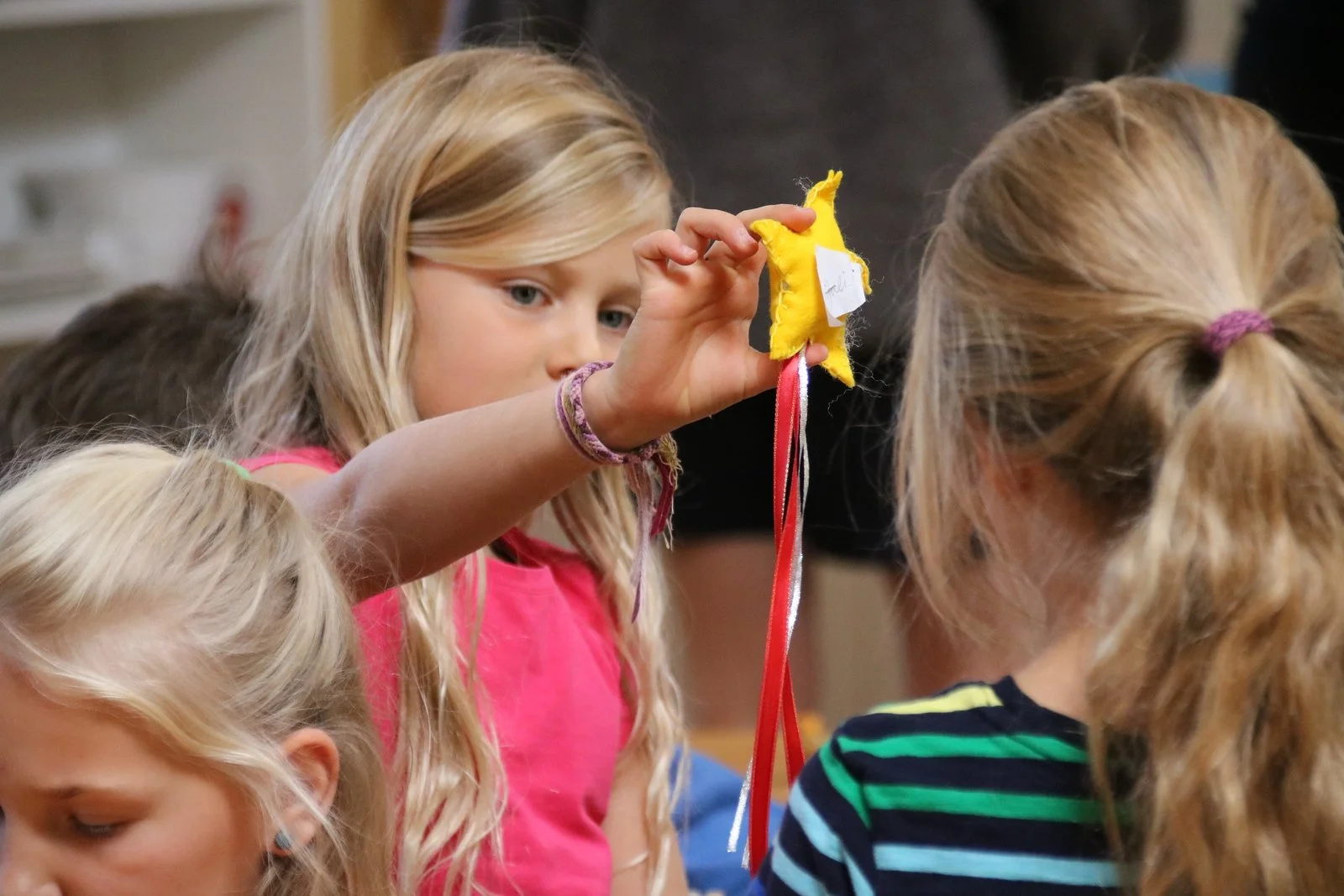
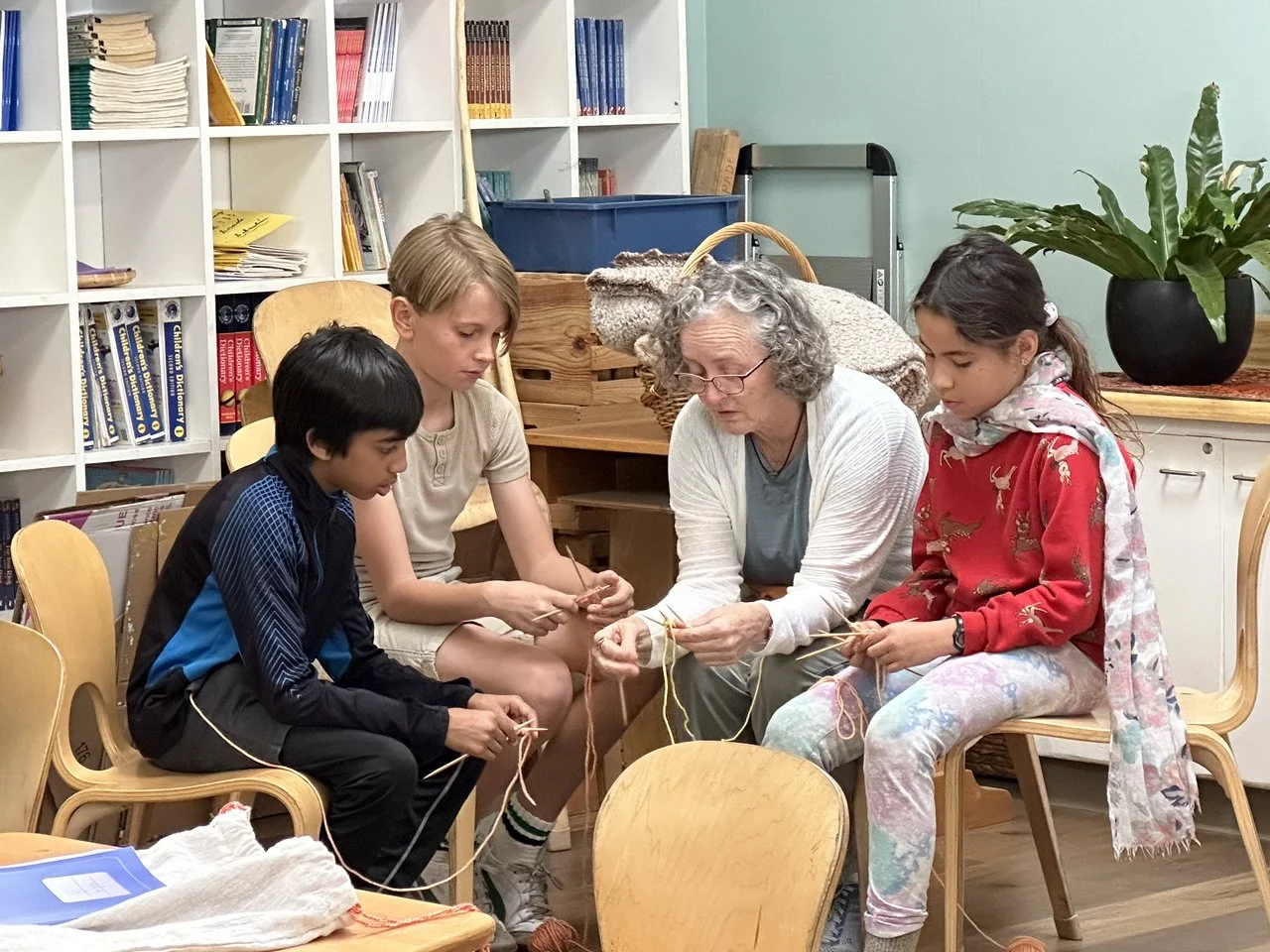
Knitting, crocheting, and sewing cultivate fine motor skills, perseverance, and aesthetic awareness.
-
![A school classroom with students seated at desks taking notes, including a young boy with dark hair and a girl with light brown hair, both engaged in learning.]()
Spanish
Introduced through song, gesture, and oral games to support intuitive language acquisition.
-
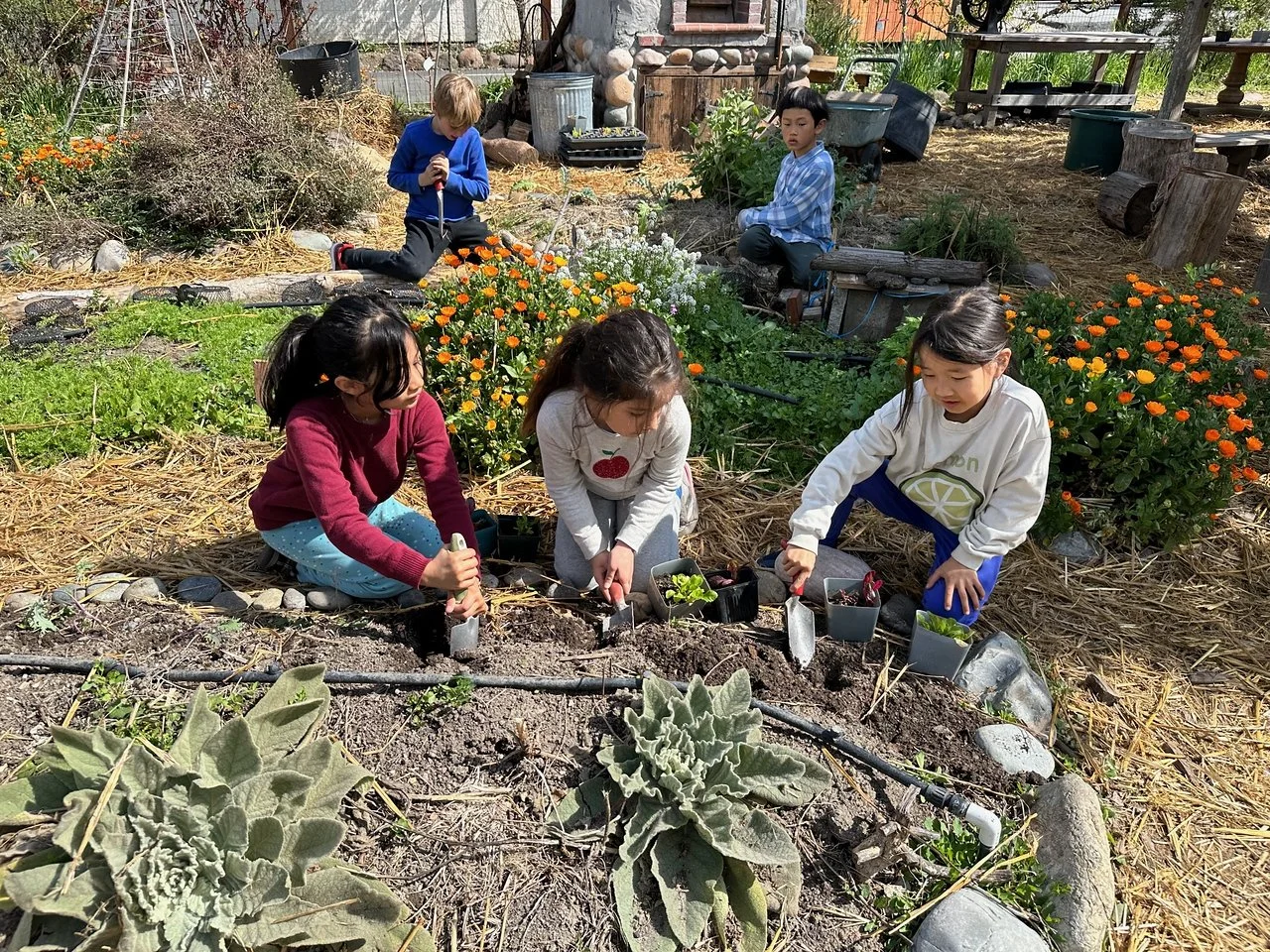
![Four students planting small plants in a garden with orange flowers, greenery, and gardening tools.]()
Gardening
Seasonal work in the garden and surrounding landscape fosters ecological stewardship and a sense of place. Learn more.
-
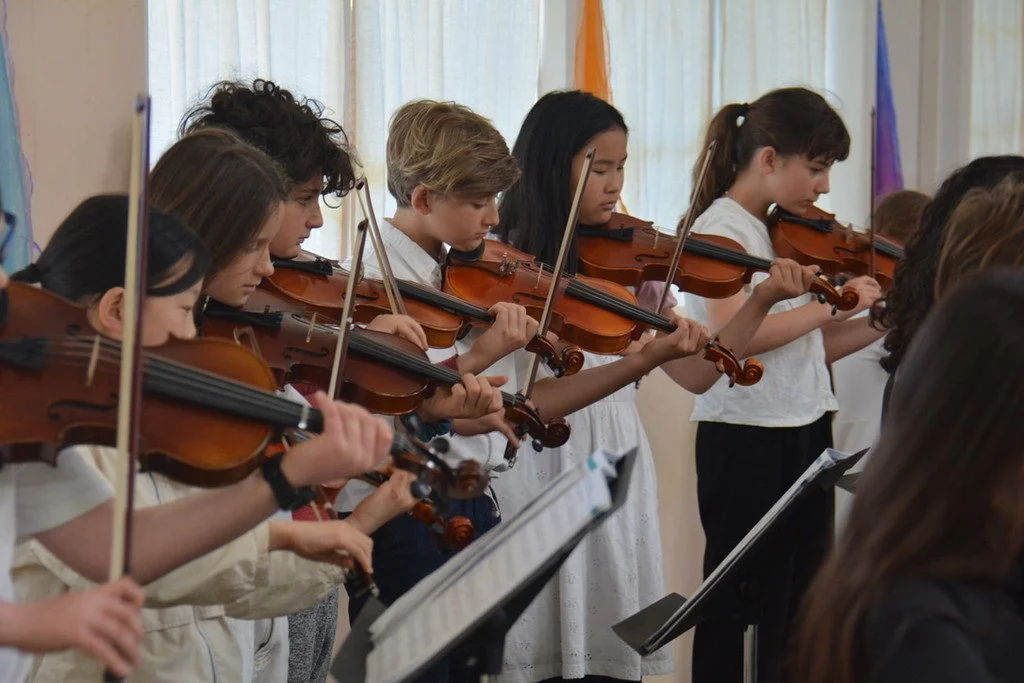
![Students playing violins during a music class.]()
Music
Children begin with the pentatonic flute and move to string instruments by Grade 3, supporting listening and inner discipline.
-
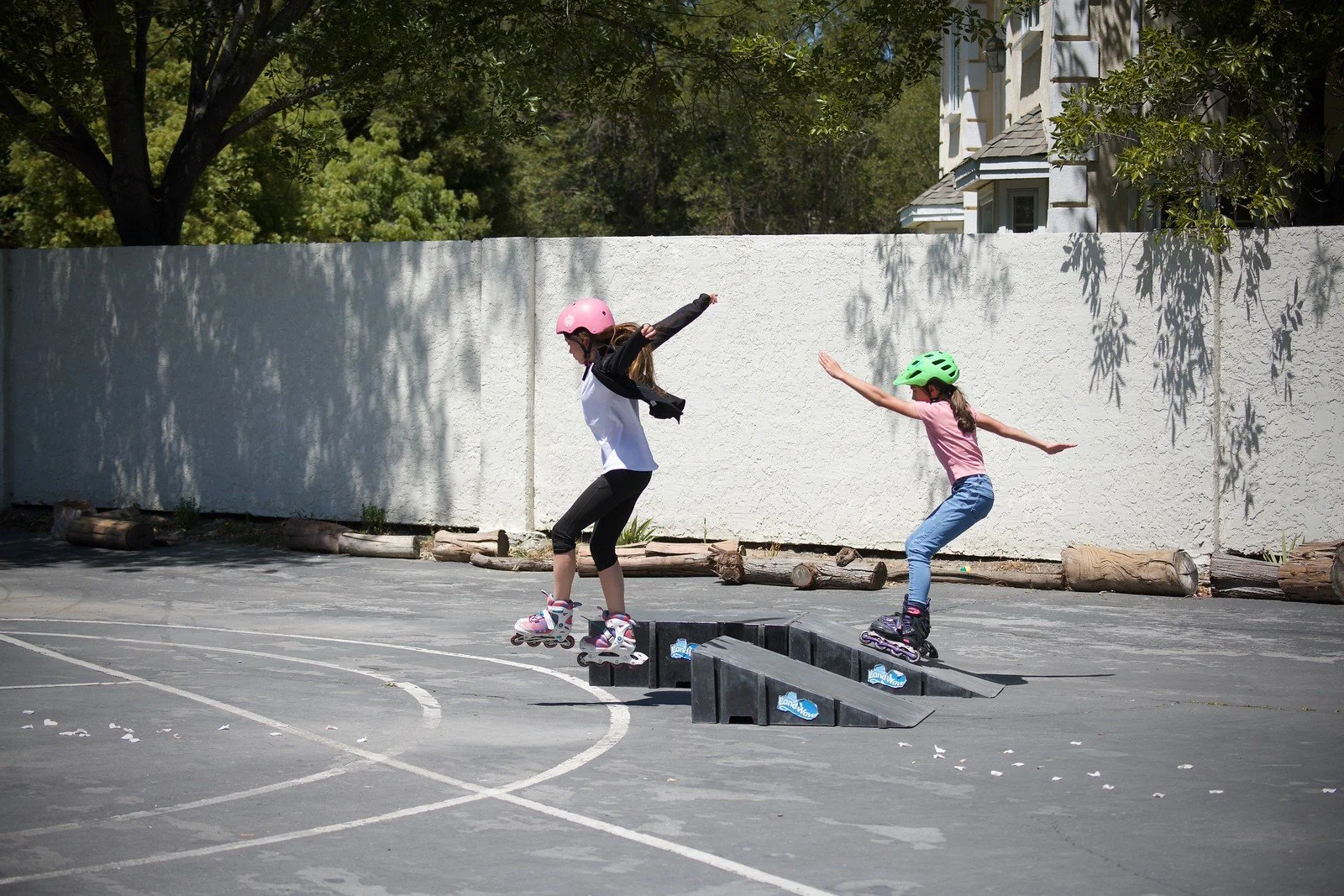
![Two female students roller skating outdoors on a sunny day, one girl is jumping over small ramps and the other girl is skating towards them. Both girls are wearing helmets.]()
Games and Movement
Spatial awareness, balance, and cooperation are developed through structured play and rhythmic exercises.
-
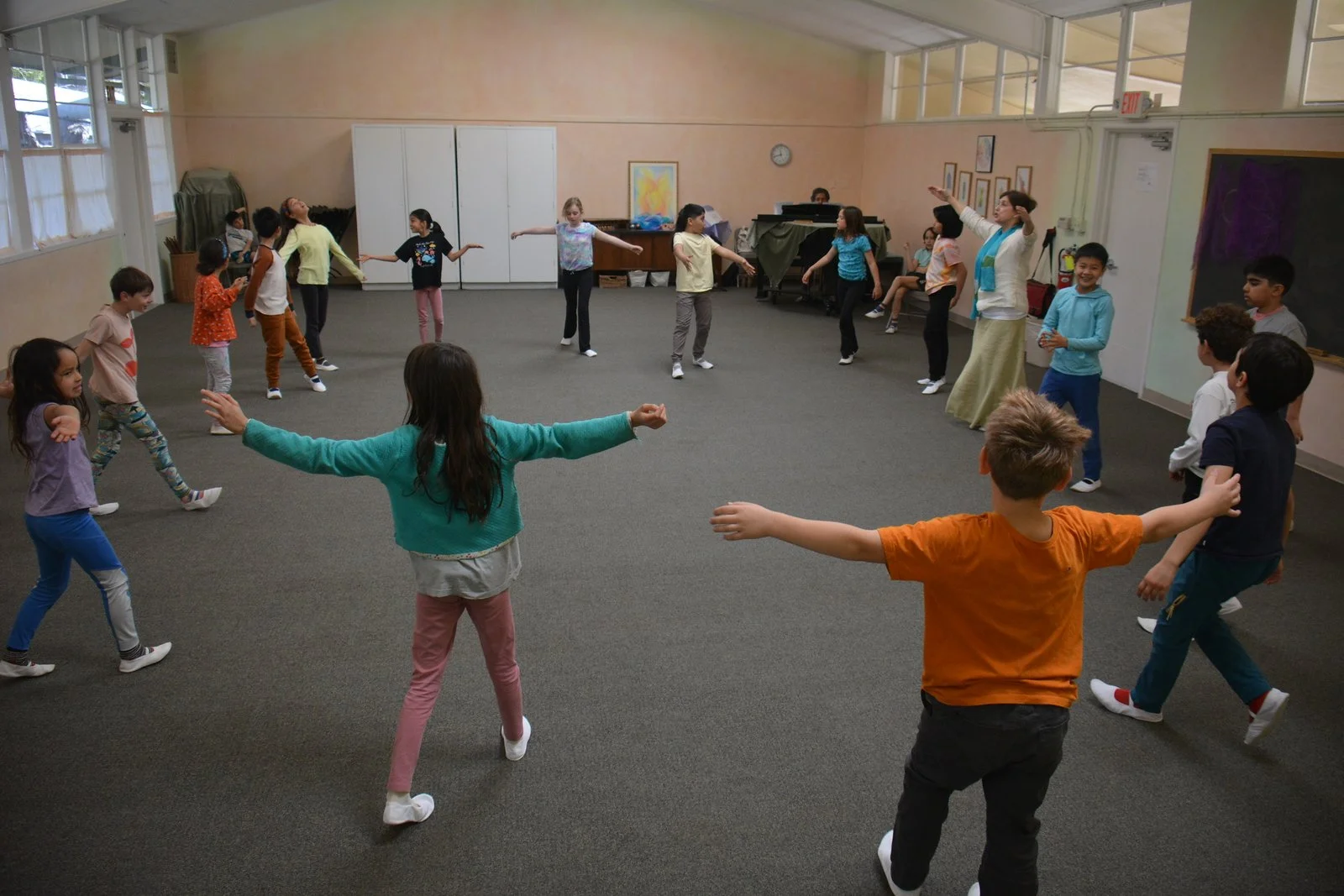
![Children and a teacher dancing in a circle in a classroom.]()
Eurythmy
Movement, gesture, and rhythm develop concentration, coordination, and social awareness through story and sound.

Why This Matters
In the elementary years, children benefit not from acceleration or abstraction, but from rhythm, artistic activity, and meaningful connection to their learning. The Waldorf approach fosters:
Executive function through structured routines
Creativity through artistic expression
Social-emotional development through continuity and collaboration
Cognitive flexibility through imaginative engagement