

The Garden as Classroom

Gardening and Waldorf
Waldorf education develops and nurtures the whole child — head, heart, and hands — through diverse curricula indoors and outdoors. Working with our hands in the school’s biodynamic garden provides students with opportunities not just to learn how to sow a seed or water a plant, but to strengthen their bodies with physically challenging projects, build dexterity with hand tools such as wood saws and whittling knives, and practice teamwork and service by cooking together using the garden’s wood fired oven.
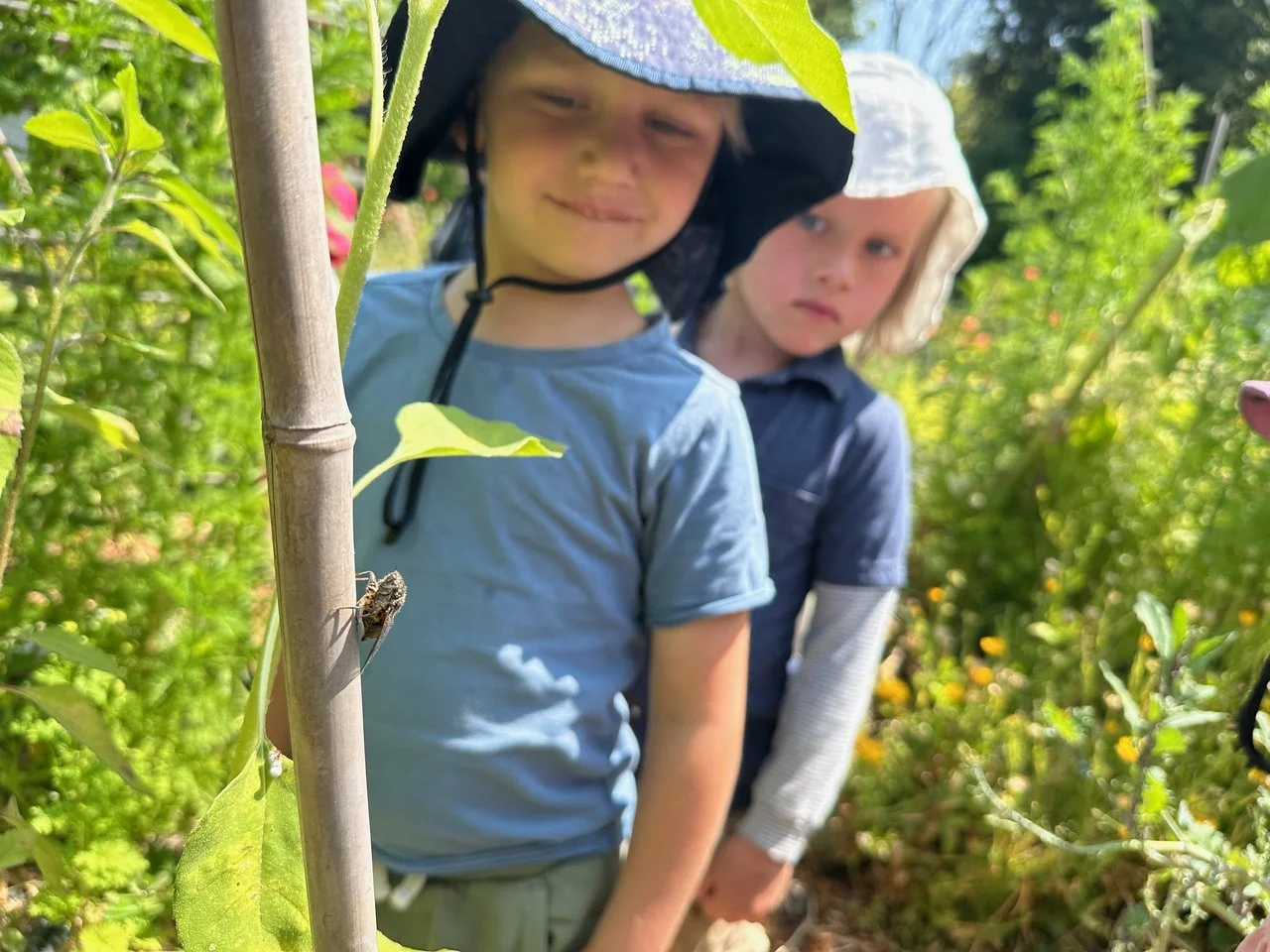
Meet Teacher John
Our school garden is a place for nourishment, connection, and breathing space for the whole community. Join Teacher John in the garden as he reflects on the deeper purpose of tending the soil with children.
Growing Outdoor Children
Grades 1–3: Two 45min Gardening periods per week.
Grades 4–5: One 45min Gardening period per week, a half-sized class for deeper exploration.
Open access: Students can visit the garden throughout the week during recess and after school, to continue projects, tend the garden, or to simply explore or have a quiet moment.
Gardening classes are held outside, rain or shine, with exceptions only for dangerous weather. Mud boots and rain jackets are necessary in the winter, as are sunhats most other times. Students learn that getting our hands dirty is natural and safe, and that scratches can be mended and not feared.

Respect All Life
Tenets of the Waldorf Gardening Curriculum:
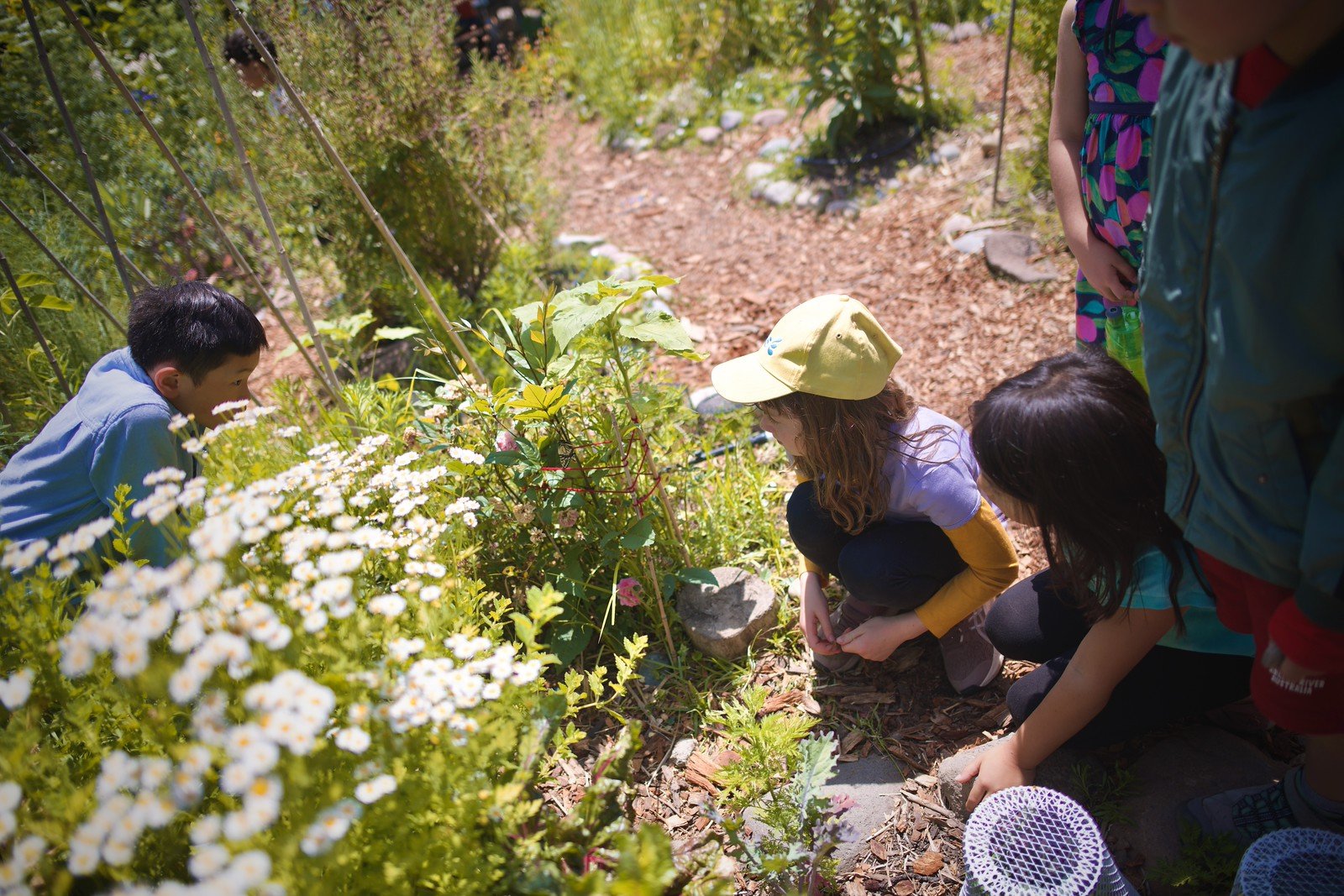
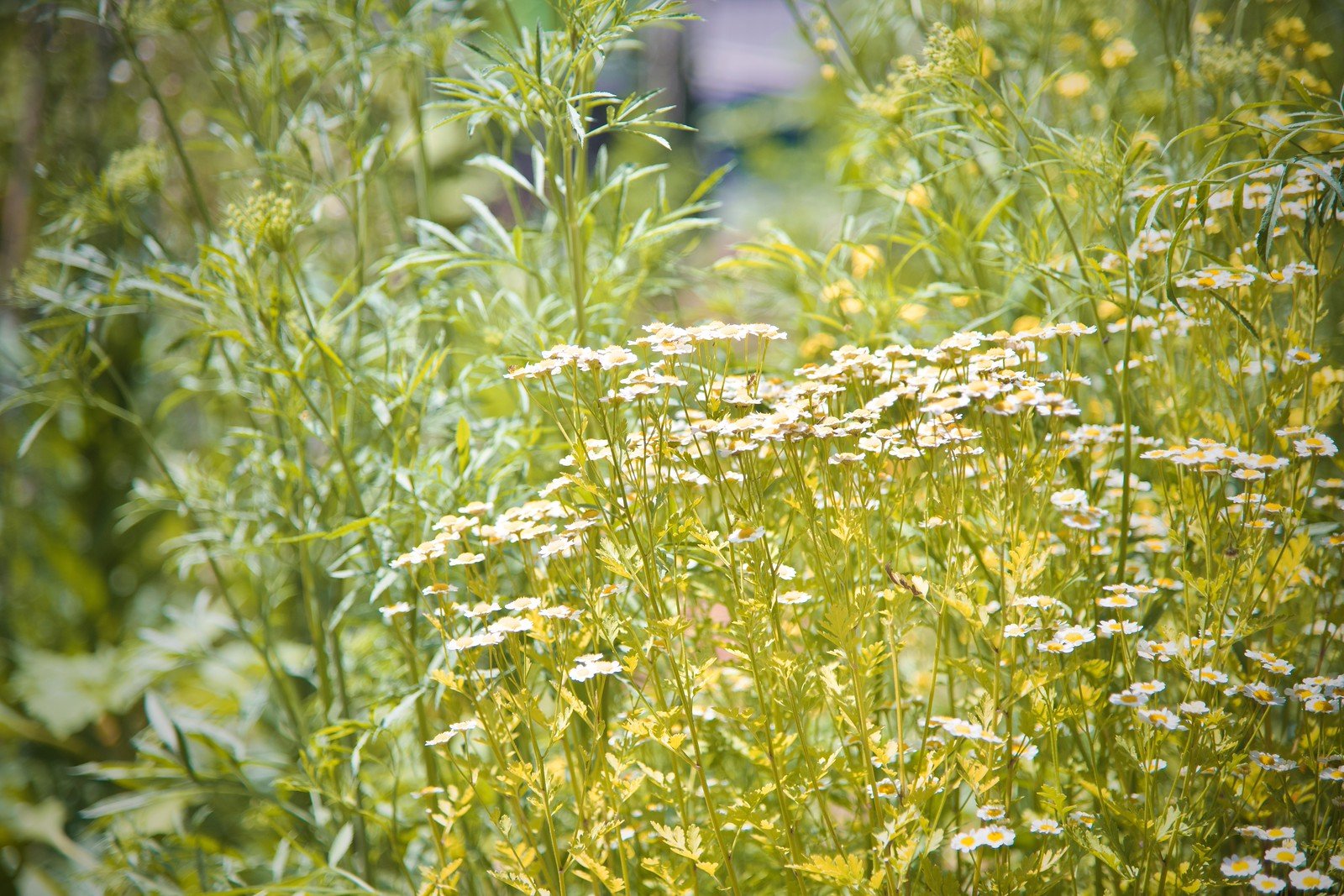
Respect for life is built through tangible exposure to diverse plants and animals.
In the garden, students see that diversity of life is what builds resilience and strength. Bees are not to be feared, ants are not to be squished, and even aphids can be food for ladybugs and a healthy ecosystem.
Tending the garden means giving to the garden as much or more than you take.
Students learn to clean and mend their tools, help tidy with others, and realize that “tending a garden” can apply to other projects and aspects of their lives at school and at home.
Strength and confidence with hand tools develops agency and self-utility.
Seeing what we can construct by ourselves and with hand tools helps students feel satisfied with what they’re able to accomplish, and starts building the picture of a tool as an extension of the student’s capabilities.
Evolving safe, intentional tool choices ensure the tools work for the child, and not consume the child.
Just as a chainsaw is not usually the right tool for the garden, students practice thinking of the needs of the task before the tool. Eager children love working with hand clippers, and are guided along thinking whether the tasks need such tools or should be accomplished without. This intentionality practice helps students even through the digital age, where digital tools are much more engaging and addicting.
The Grades Gardening Curriculum
Grade 1: Garden as Home
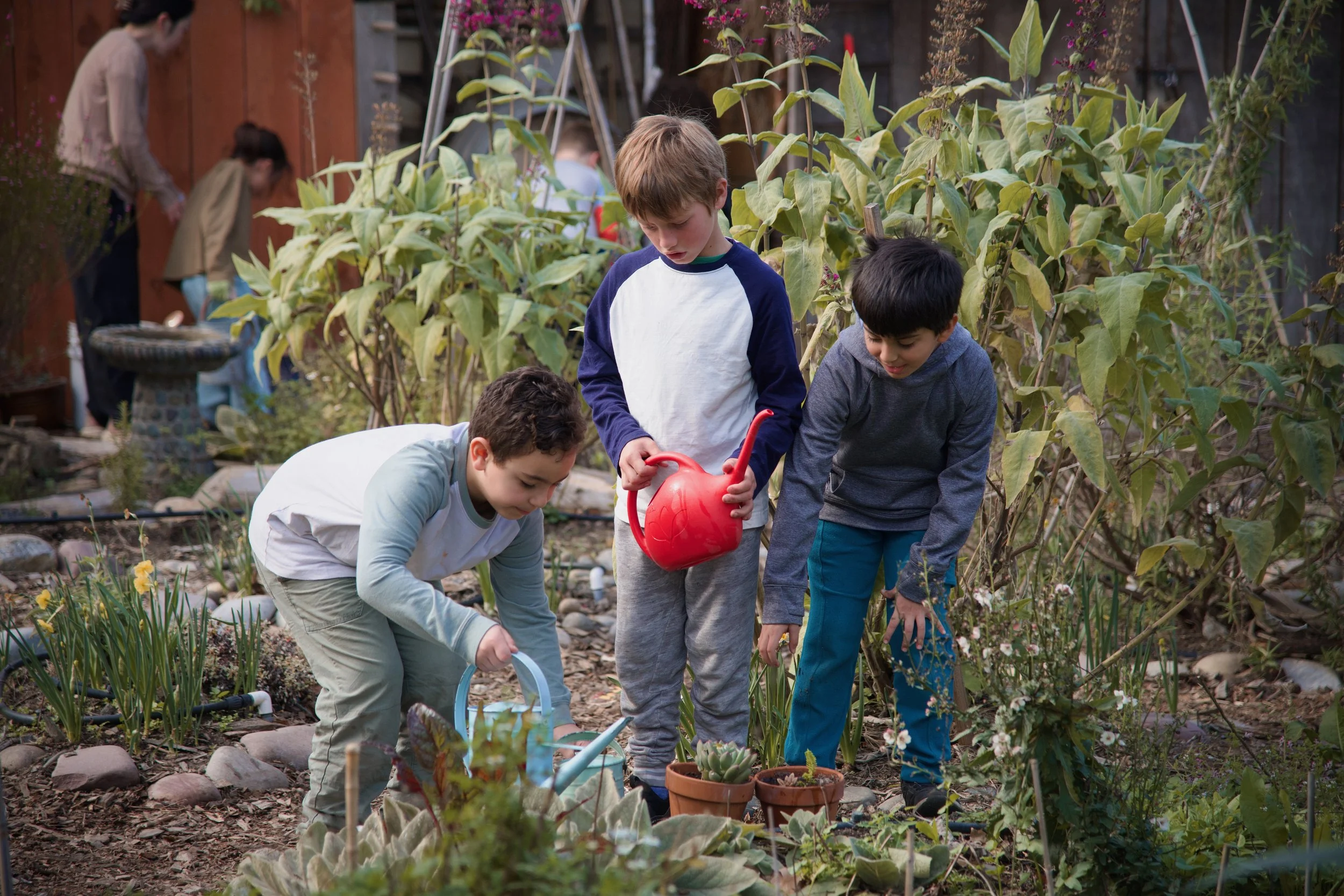
First graders meet the garden as a place of curiosity and exploration. They take time to explore with all of their senses, learning to tend flora, fauna, and even imaginary friends.
Students experience:
Exploring all the different textures, colors, and smells of the garden
Building fairy houses and crafts using garden materials
Planting bulbs and large seeds like beans and sunflowers
Harvesting flowers, herbs, and eating produce straight from the garden
Simple tool use with trowels, watering cans, and clippers
Getting their fingers dirty mixing soil and potting plants
Grade 2: Campus as Garden
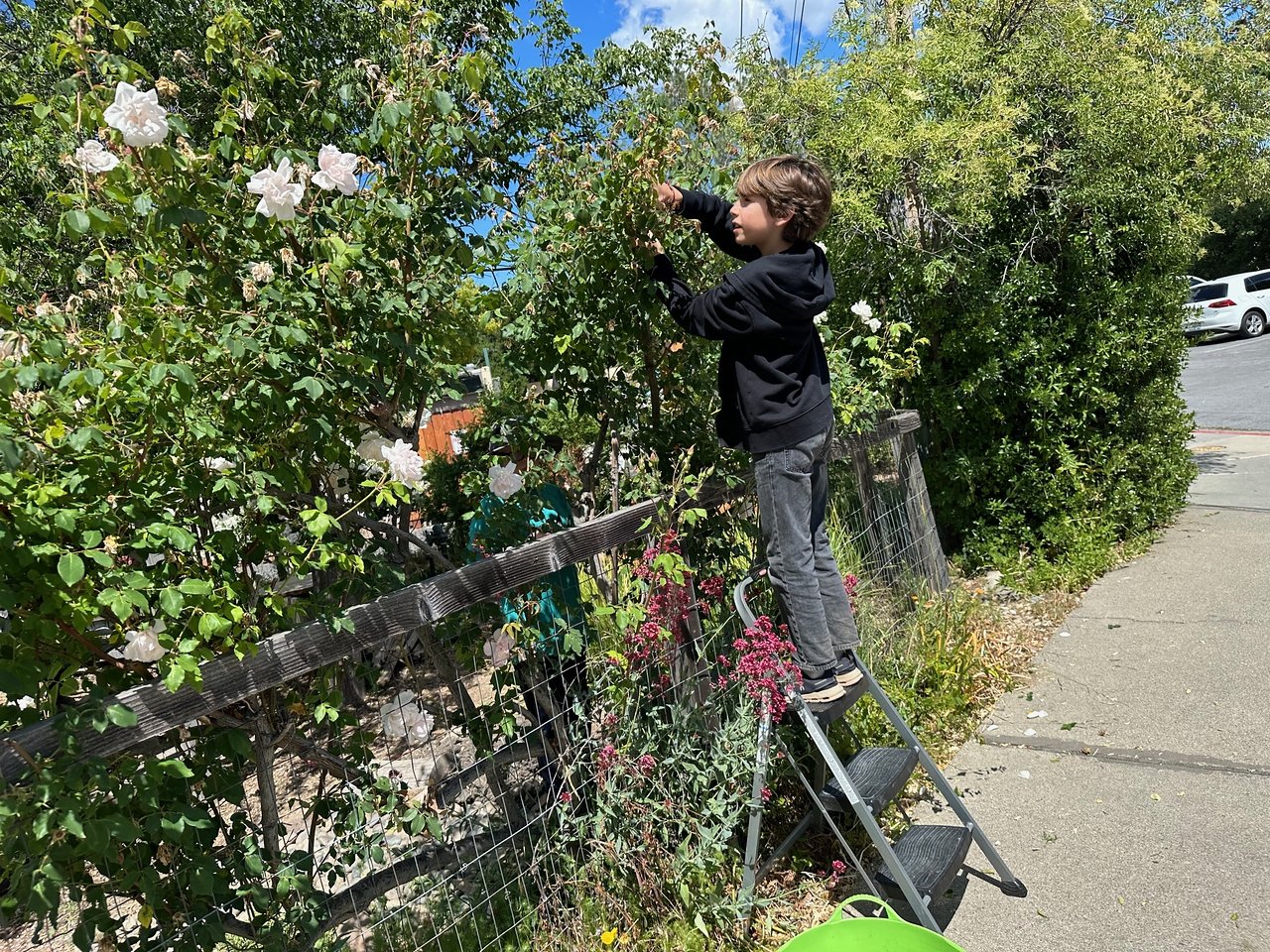
Second graders expand their view beyond the garden fence, seeing themselves as gardeners of the entire campus. They learn that the garden's abundance is meant to be shared.
Students experience:
Delivering flower bouquets to classrooms as "flower fairies"
Tending smaller garden beds around campus
Championing classroom compost programs
Working with expanded tool sets including loppers and rakes
Learning about stewardship and shared responsibility
Grade 3: Community as Garden
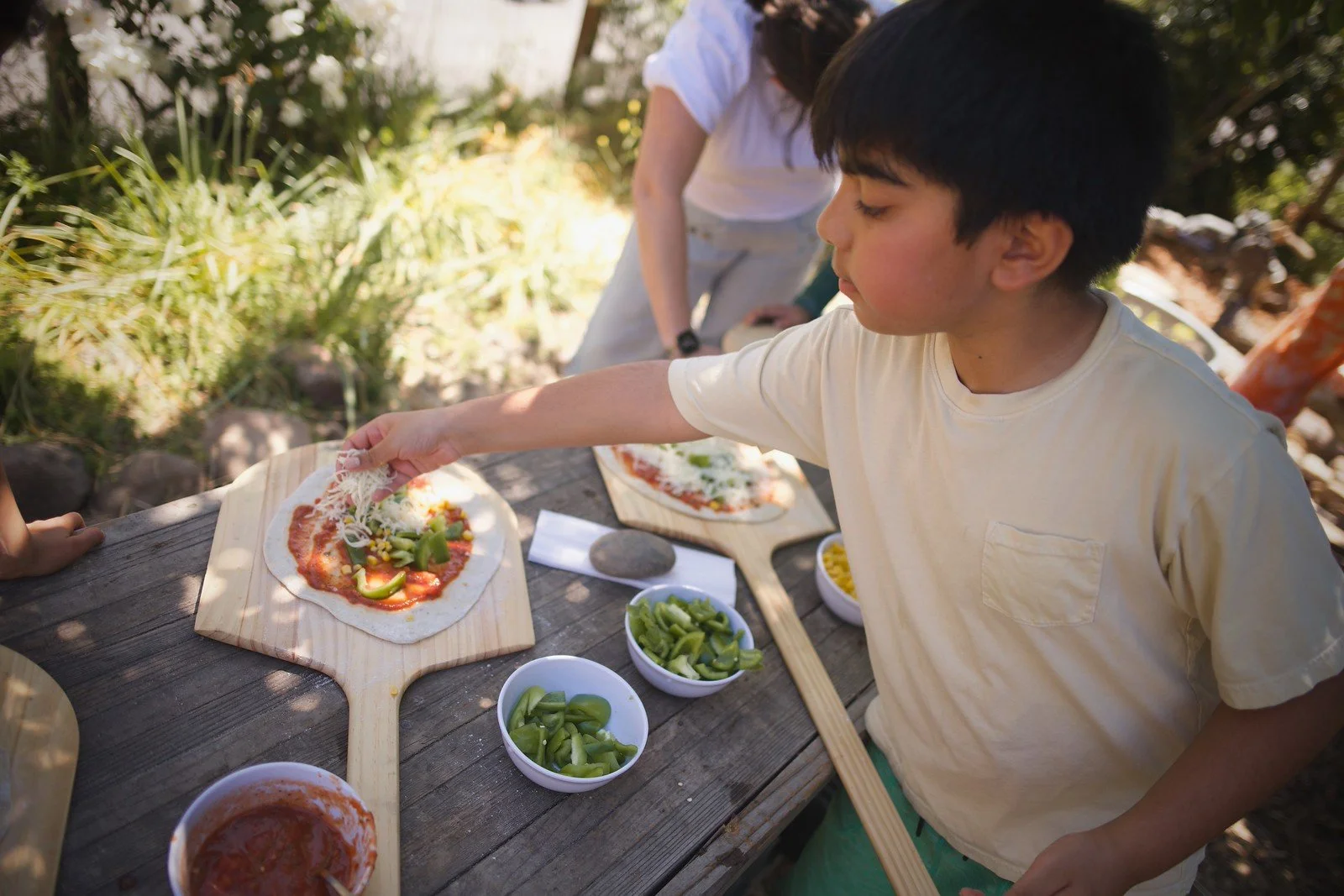
Third graders take on larger collaborative projects — building something substantial like a large garden cold frame, or cooking and serving pizza to the other grades. This supports their main lesson work in farming and measurement.
Students experience:
Large-scale teamwork on construction and community projects
Using real building tools: hammers, saws, measuring tapes, manual drills
Planting and harvesting grains and staple crops
Hosting other classes for garden-cooked meals
Measuring compost temperature and rainfall
Grade 4: Watershed as Garden
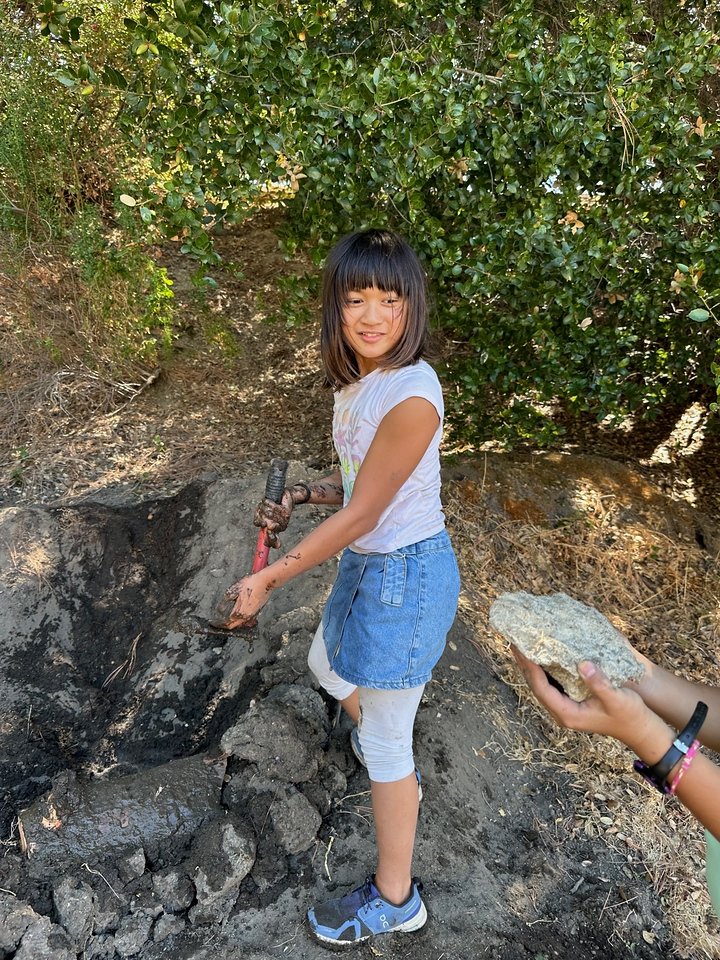
Fourth graders broaden their perspective to consider the land from mountaintops to ocean. They work more independently while connecting garden work to geography and watershed studies. This supports main lesson work in geography and the human-animal connection.
Students experience:
Building bird and owl boxes for campus and home
Observing and documenting garden wildlife behavior
Exploring native foods like corn, making masa and tortillas
Learning about rainfall, seasons, and ecological connections
Grade 5: Garden as Ecosystem
Fifth graders dive deep into the complexity of natural systems. They maintain longer-term projects while exploring how agriculture connects to global food systems.
Students experience:
Detailed work like woodcarving, wood burning, and bonsai pruning
Tool maintenance including sharpening and care
Food preservation: canning, pickling, sourdough making
Plant propagation through grafting and cuttings
Creating gifts for the garden through woodworking and art
Assessment & Growth
Rather than testing, our teachers practice careful observation, noting each student's growth in:
Safe and intentional tool use
Respect for self, respect for class, respect for teacher
Engagement with individual and collaborative work
Physical development and skill building
Progress is shared through twice-yearly parent conferences and detailed end-of-year reports that capture each child's unique journey.
The garden teaches what no textbook can: that each contribution we make to the garden is a link in a long chain of contributions by others, and that diversity is the foundation of strength and resilience. It offers a space for calming our heart and mind so that we can have the strength to create amazing things.