
Thermal Physics, Electromagnetism, and...Eurythmy Cheers?
At WSP, STEM is not a spectator sport! It’s been a dynamic stretch in our science classrooms; the kind where heat rises, sparks fly (safely!), and innovation hums. Here’s a glimpse into what students have been exploring across campus…
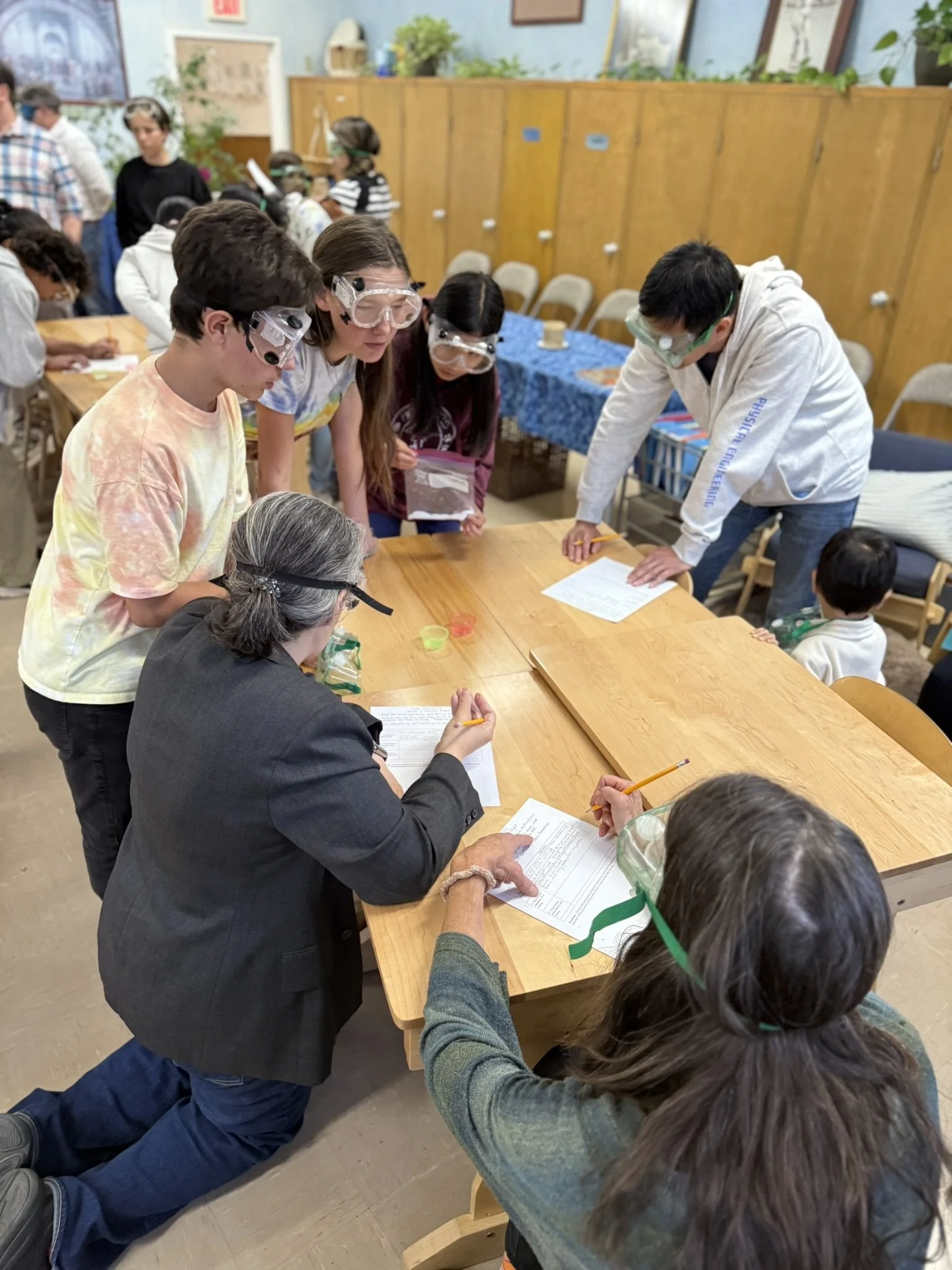
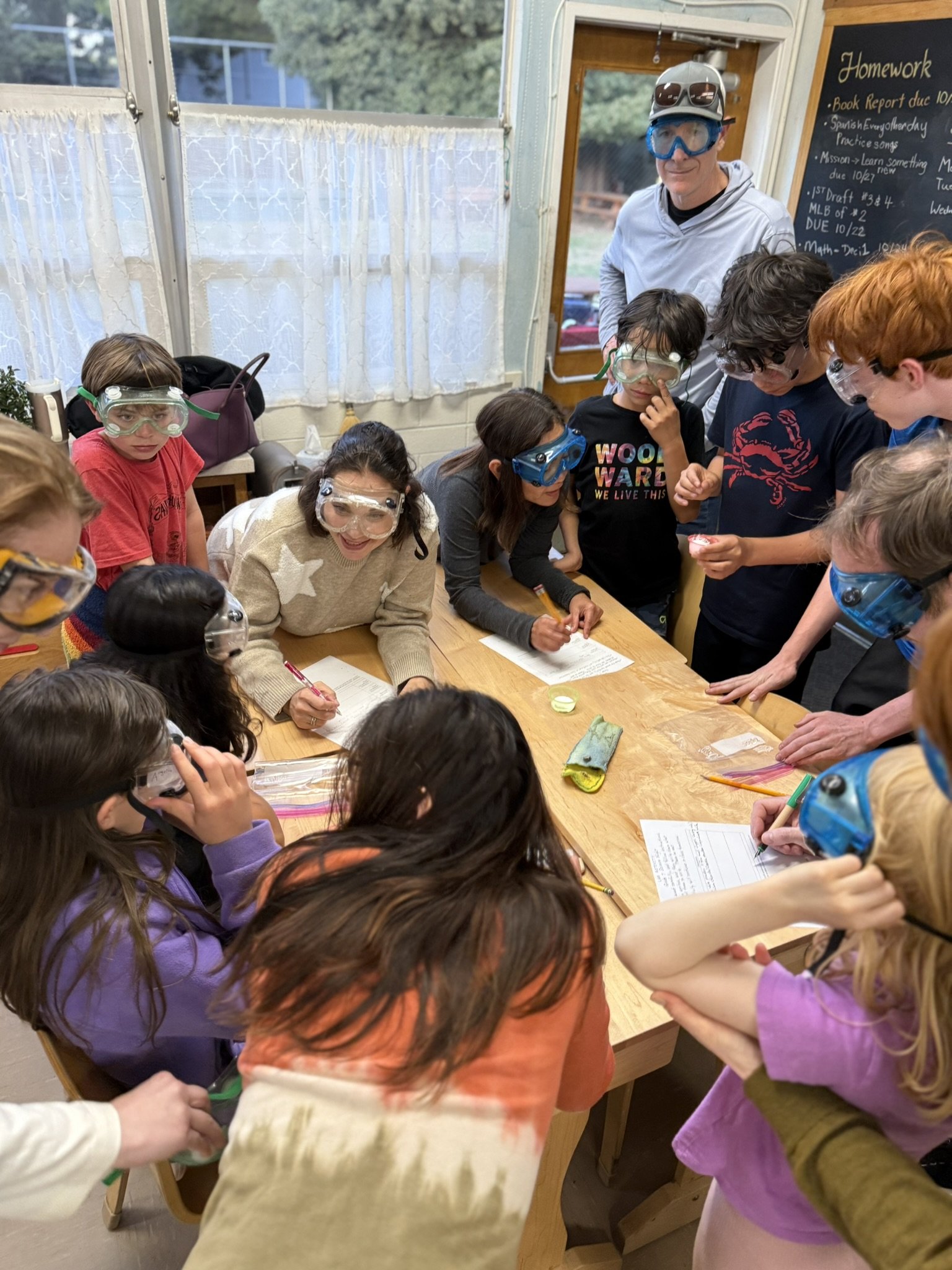
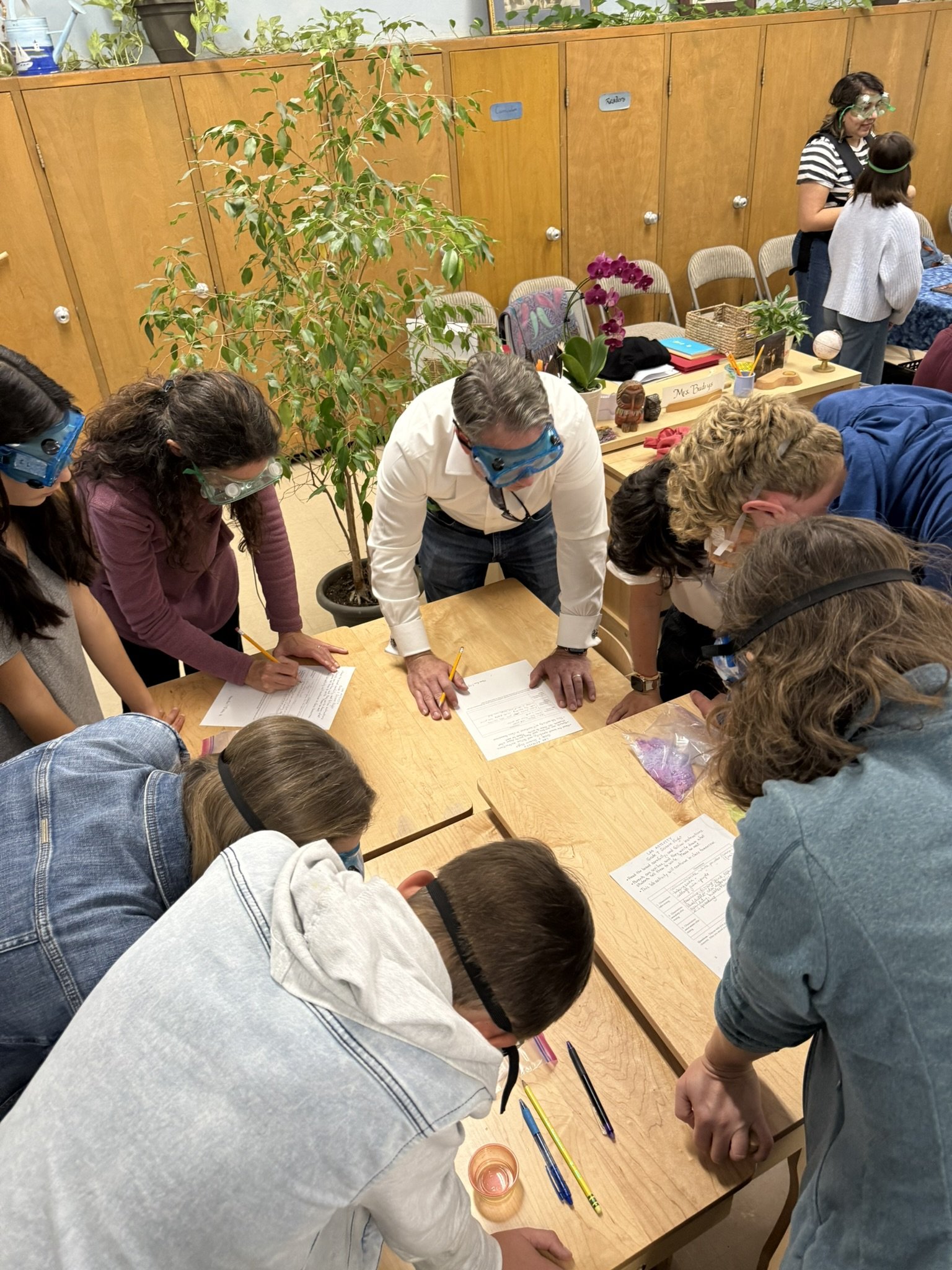
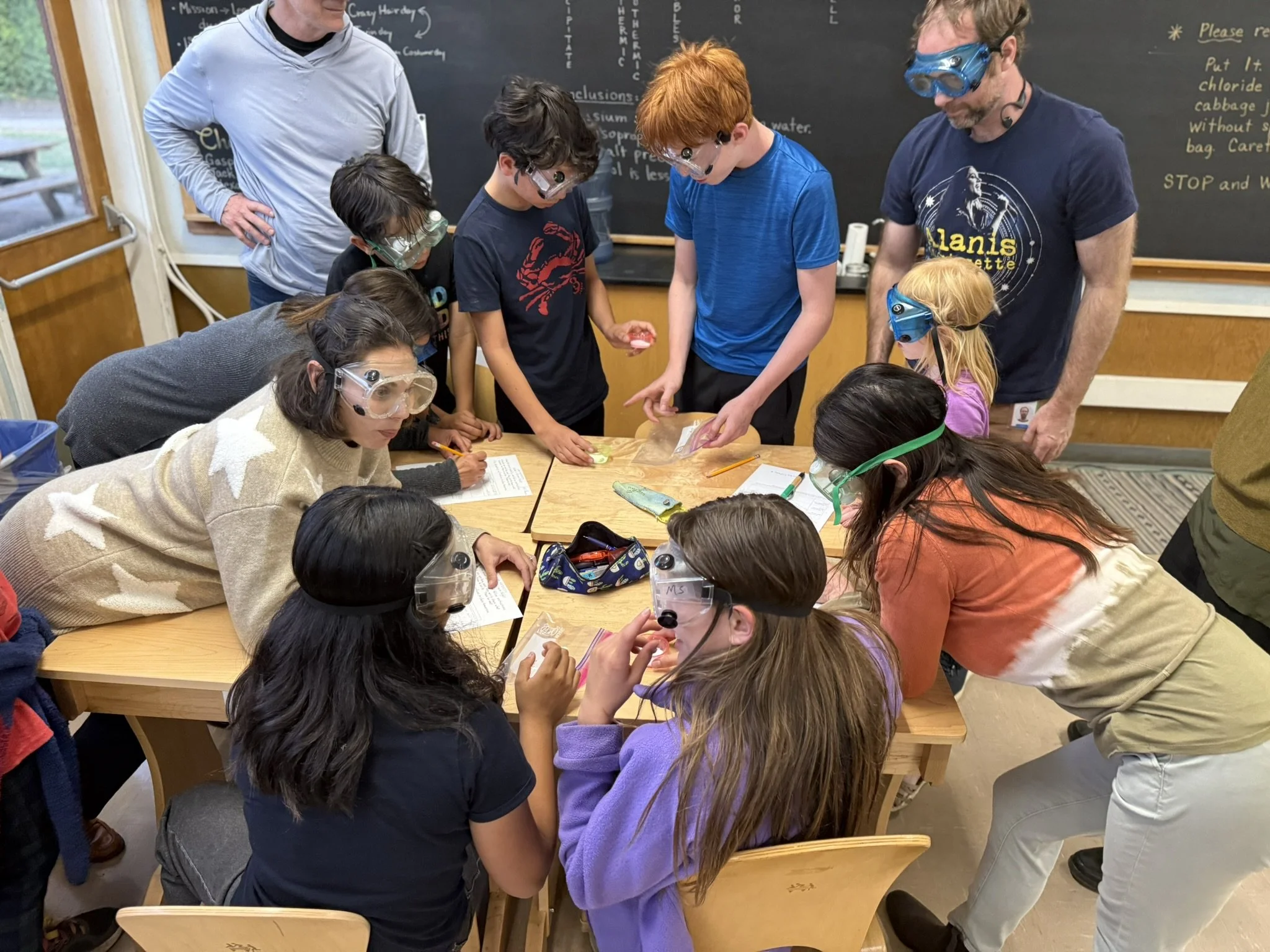
In Grade 7, students flipped the script at Parent Science Night, leading their families through a chemistry experiment on crystallization and acids and bases. Students guided the process while parents served as scribes, creating a lively atmosphere of curiosity, focus, and genuine partnership in learning.
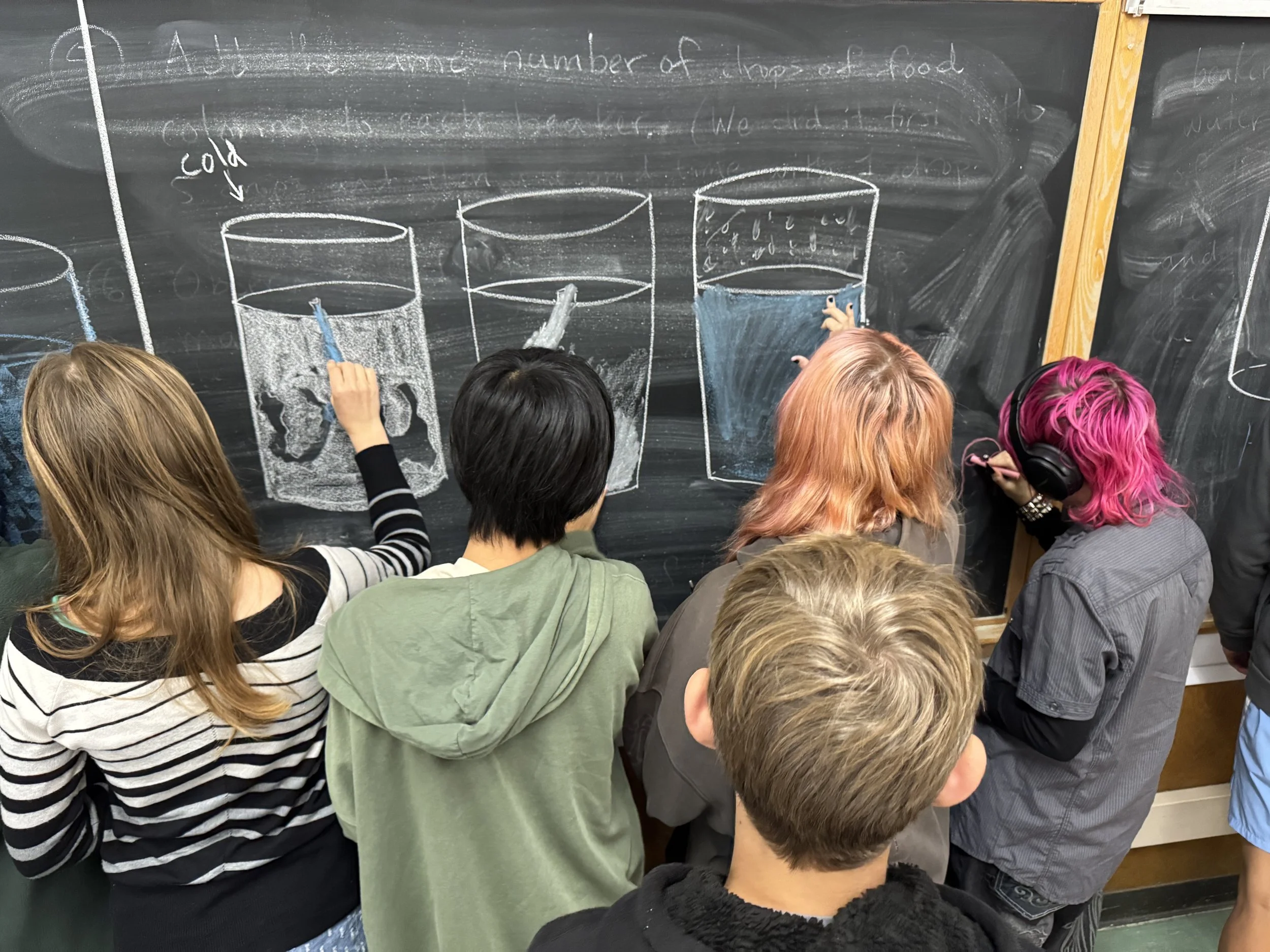
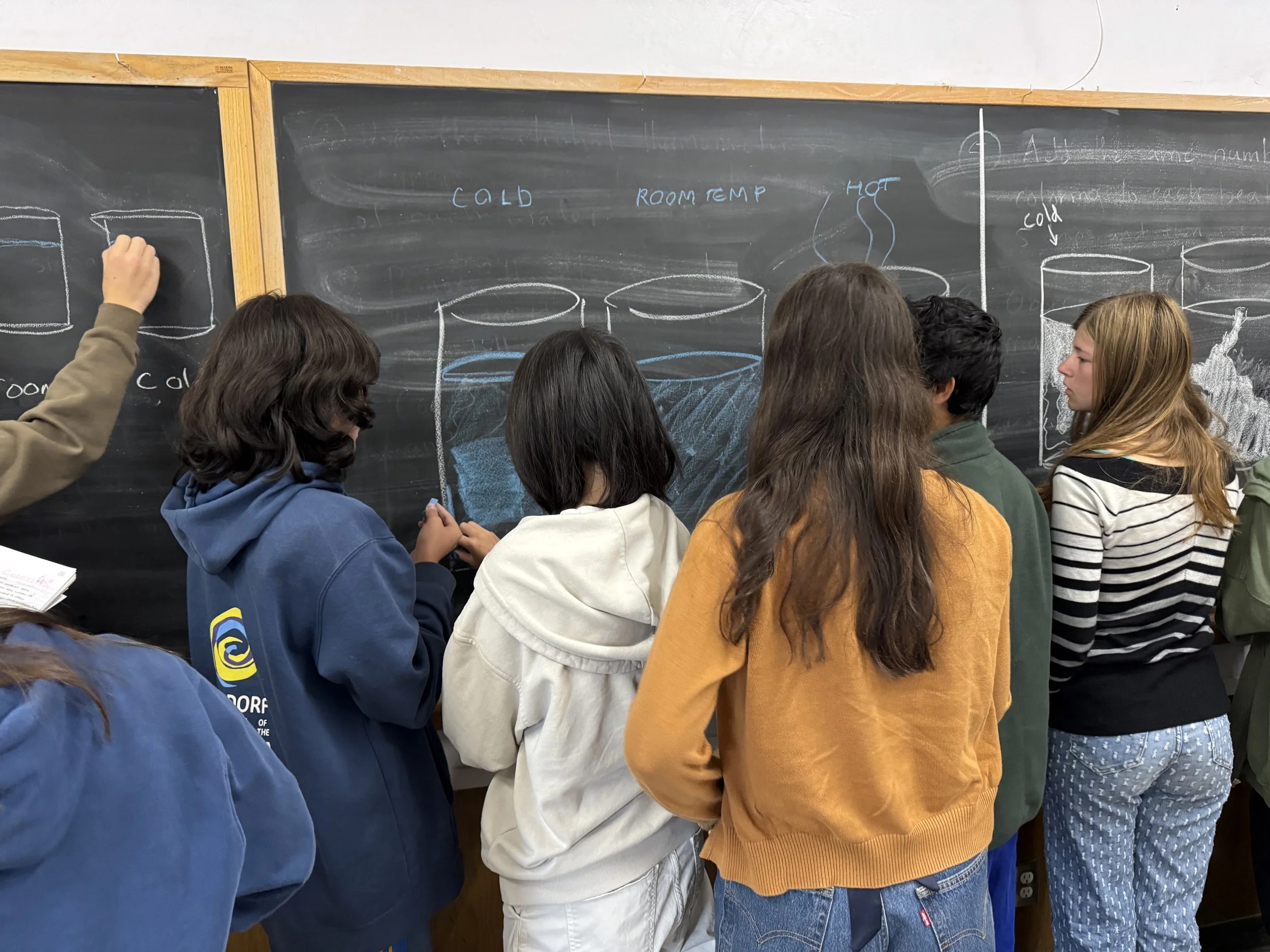
Right now, Grade 9 physicists are deep in Thermal Physics, turning everyday materials into windows on the laws of nature. In one experiment, students added drops of food coloring to hot, room-temperature, and ice-cold water, sketching what they observed as color drifted and diffused.
No textbook illustration can replace watching heat, energy, and molecular motion reveal themselves. It’s rigorous science rooted in seeing how the world works.
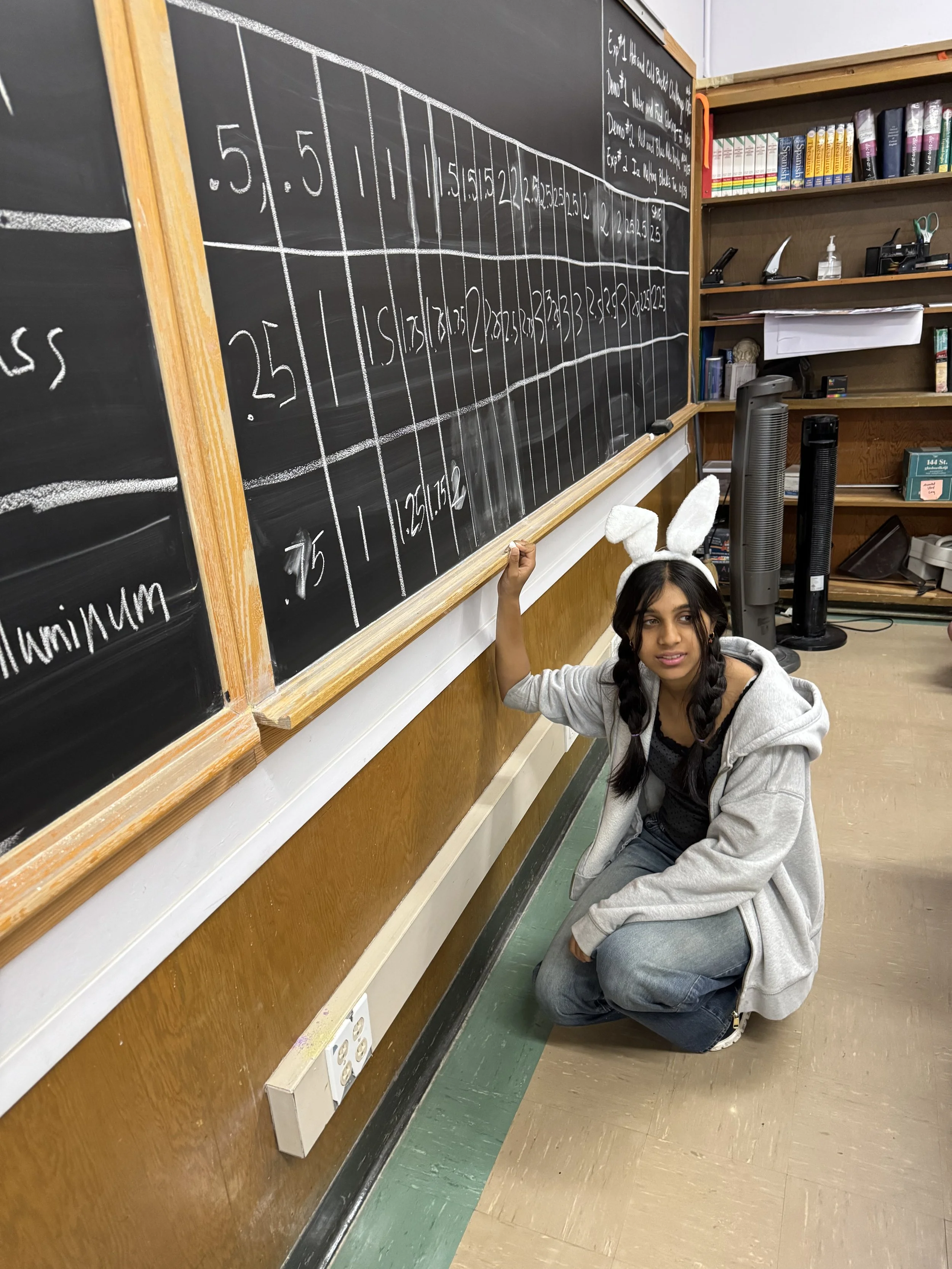
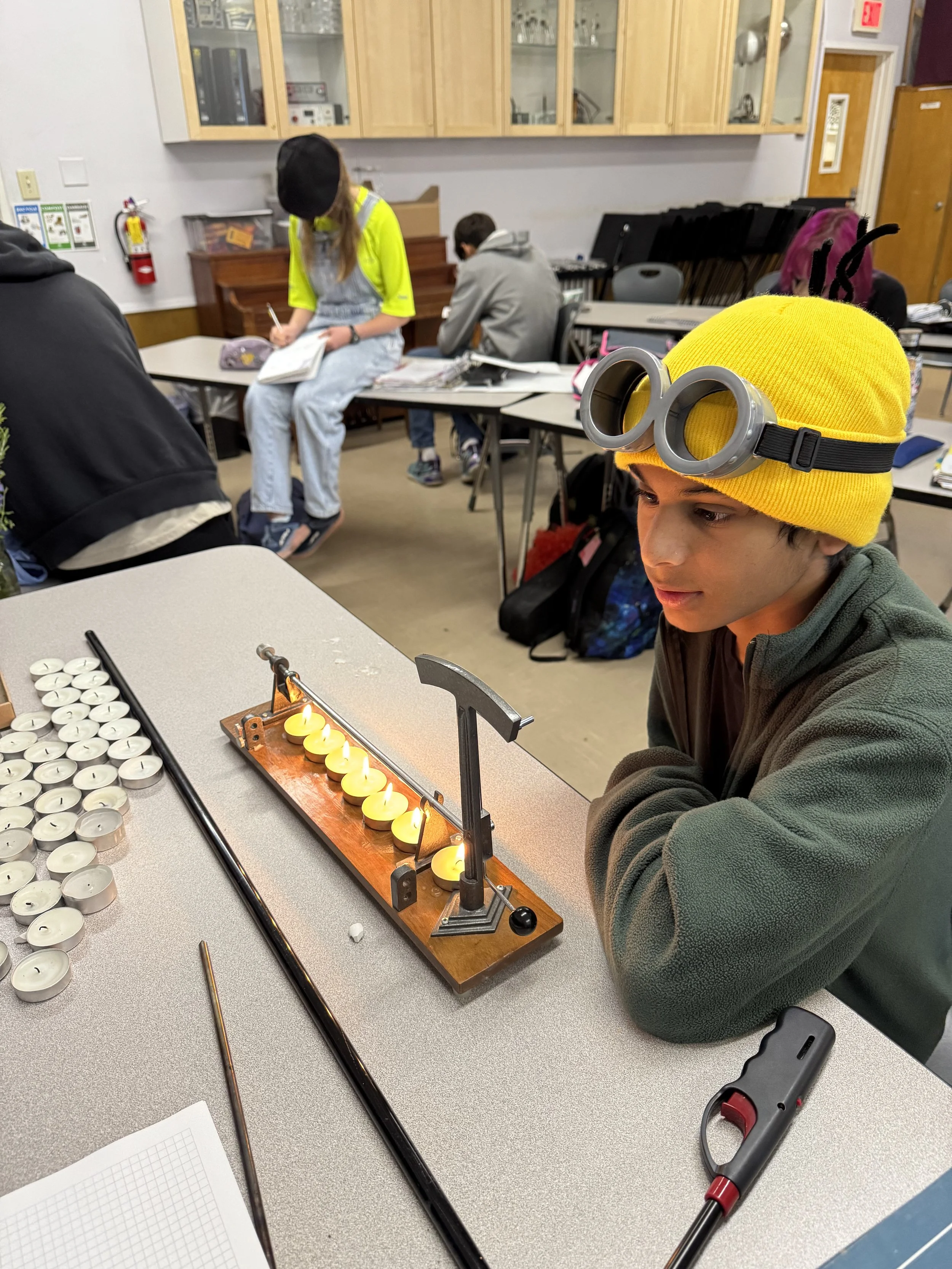
Another experiment has students heating metal rods of aluminum, brass, and steel to measure linear expansion over time. Clipboards ready, candles lit, aluminum glowing…this is scientific thinking in formation: systematic, observational, and grounded in lived experience.
Meanwhile, in Grade 10 Earth Systems, students have officially begun their study of the dynamic vertical and lateral movement of the atmosphere and hydrosphere. Through observation, modeling, and data-driven inquiry, they are investigating how air and water circulate across our planet — from wind currents to ocean flow patterns — revealing the interconnected forces that shape climate, weather, and life on Earth.
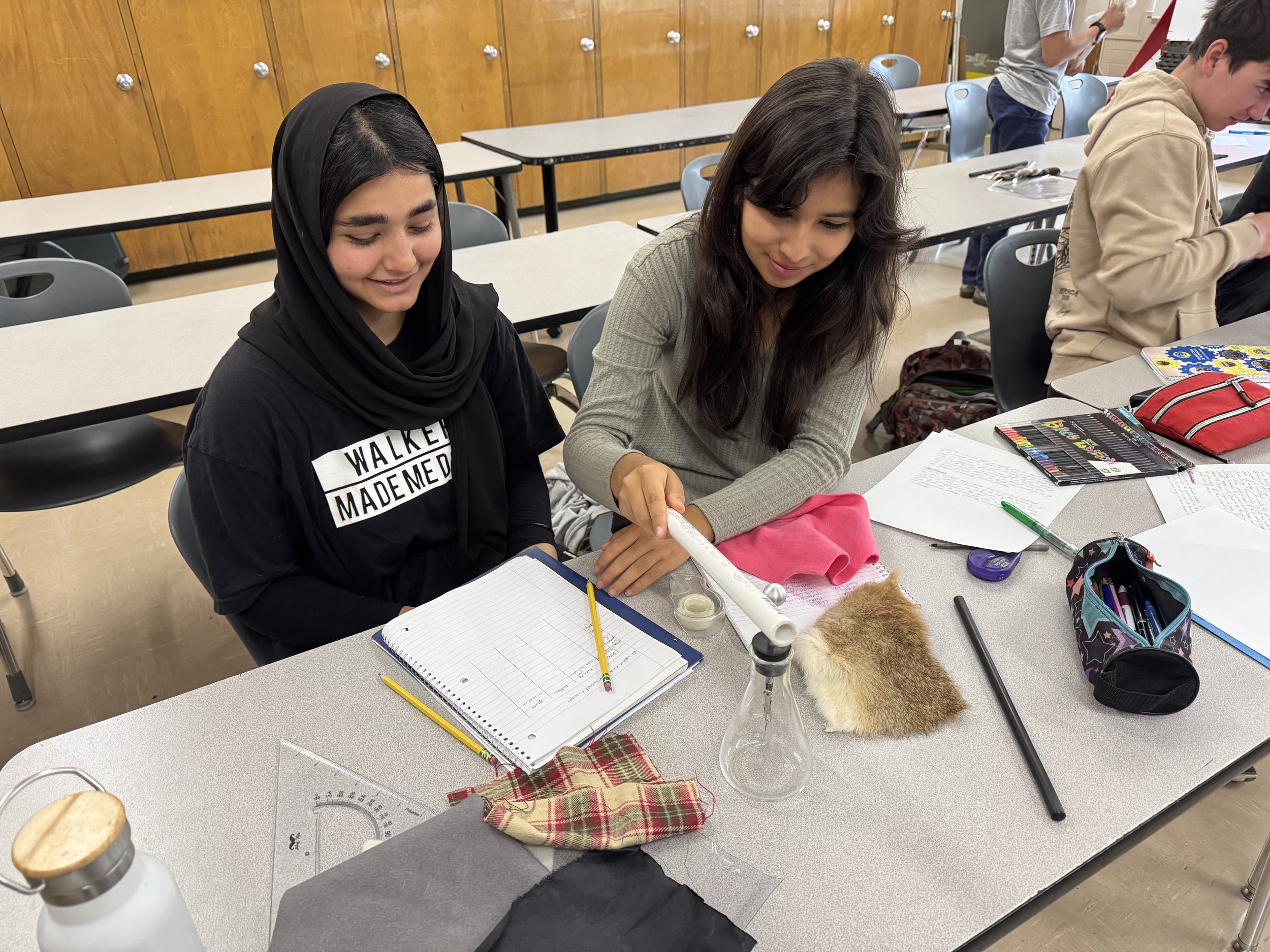
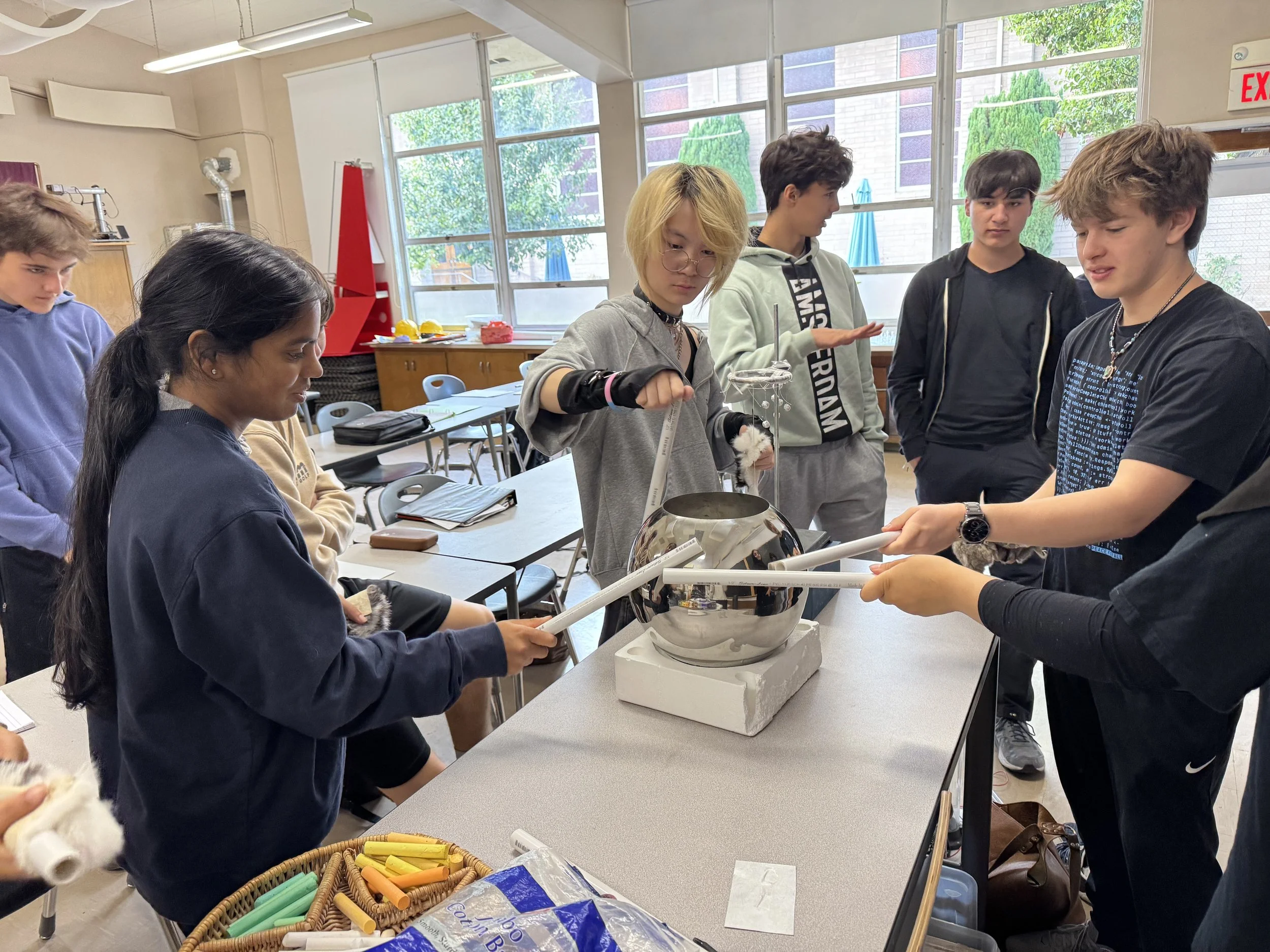
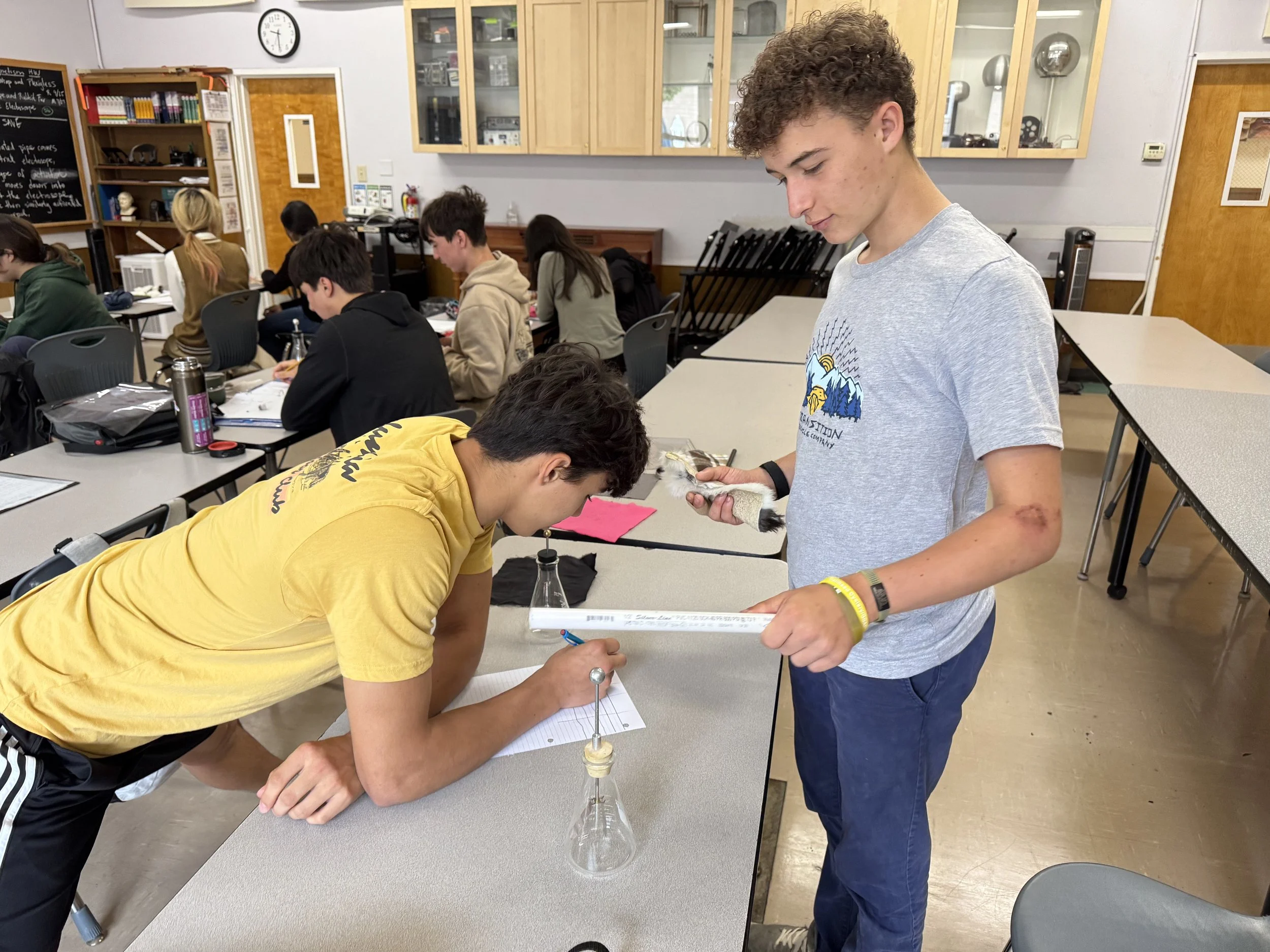
Grade 11 wrapped up Electricity and Magnetism with a series of electrifying lessons (literally).
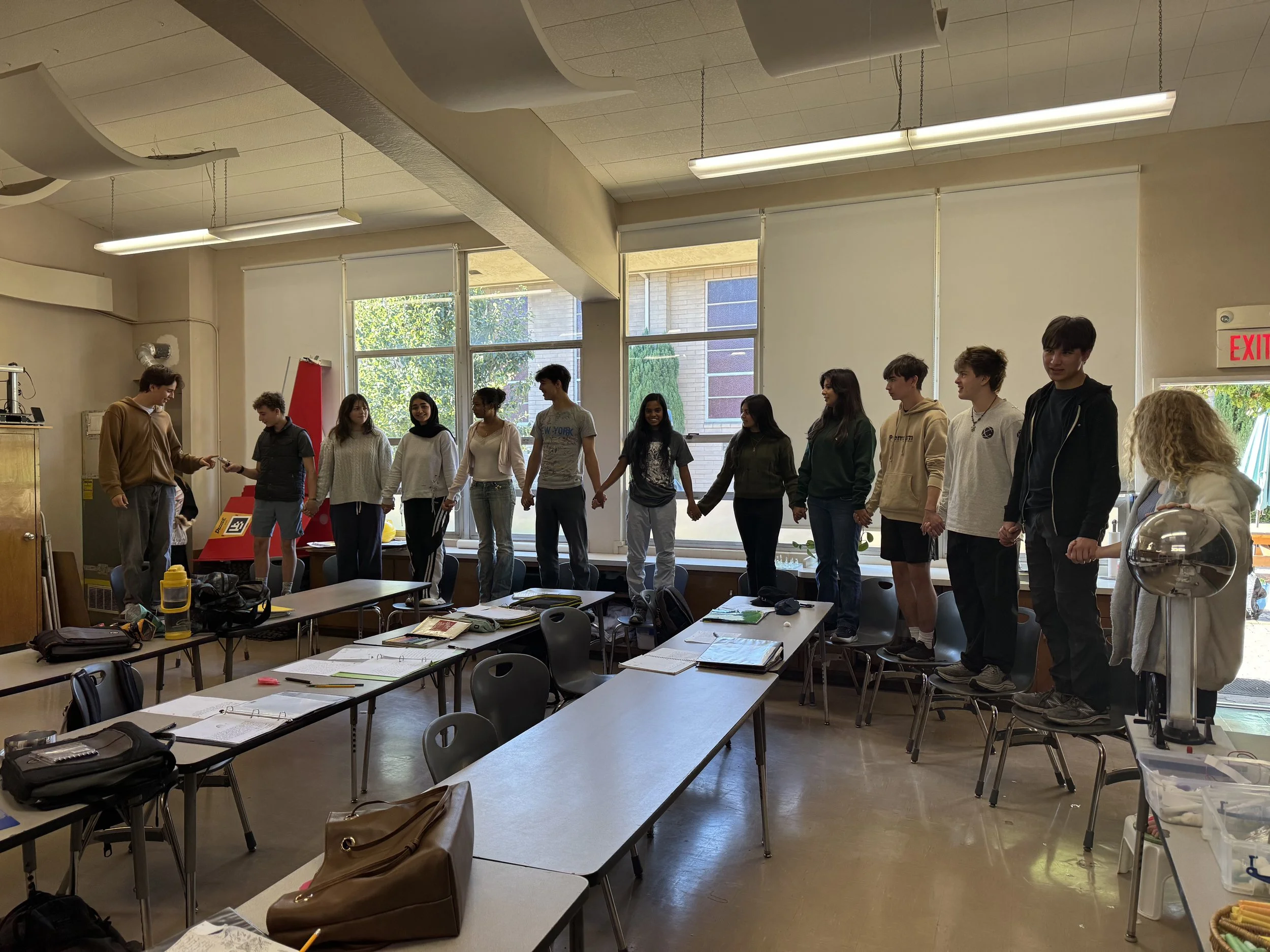
Students rubbed different fabrics on rods of varying materials, explored the triboelectric series, and used electroscopes to compare charges. They suspended PVC pipes, tested conductors, and—in a class-favorite moment—stood on insulating chairs and linked hands to become a human charge chain powered by a Van de Graaff generator.
Static hair and laughter aside, students weren’t just learning principles; they were embodying them. In a world where algorithms and circuitry shape daily life, they’re building understanding from the ground up (and sometimes above ground, on plastic chairs).
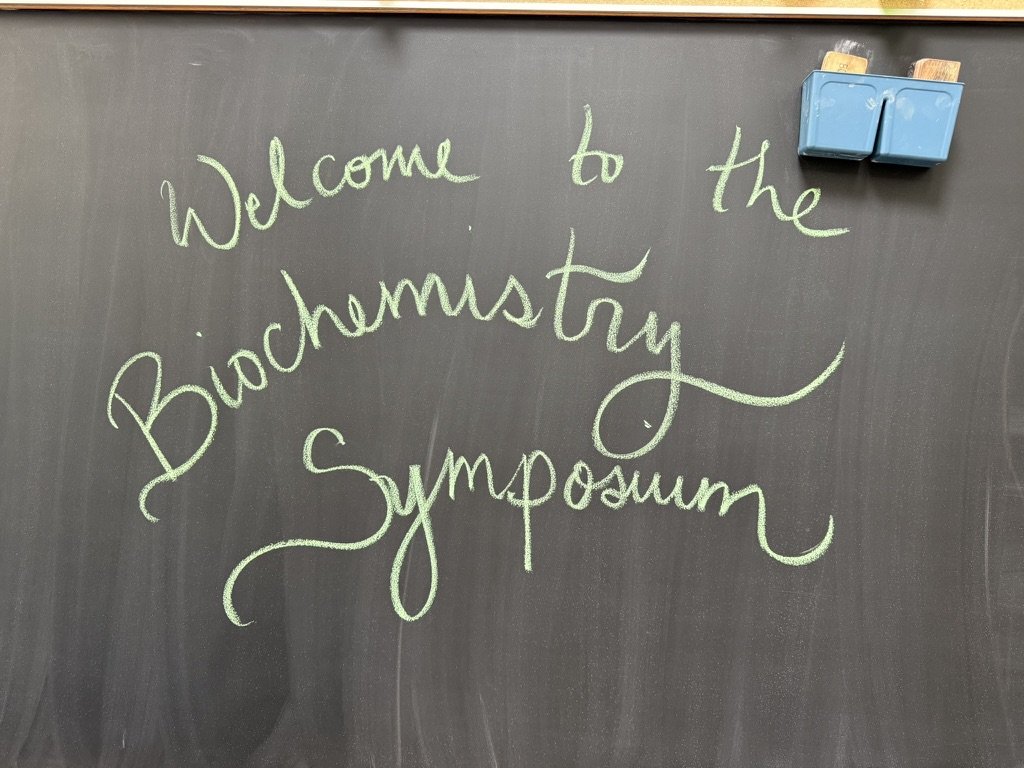
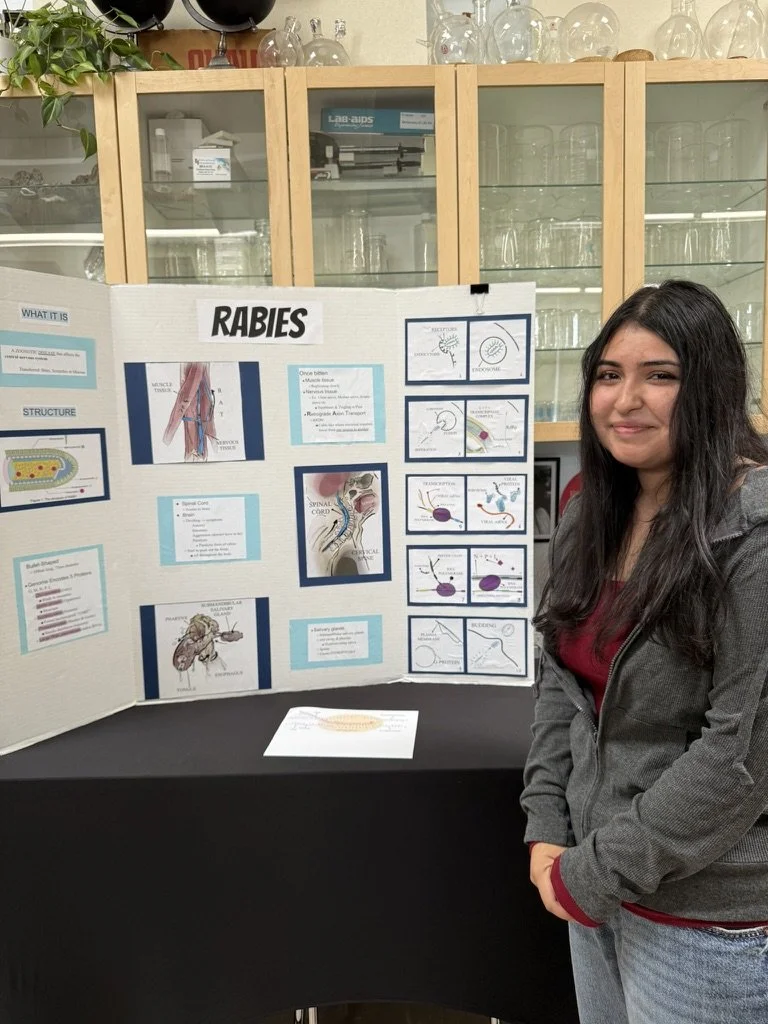
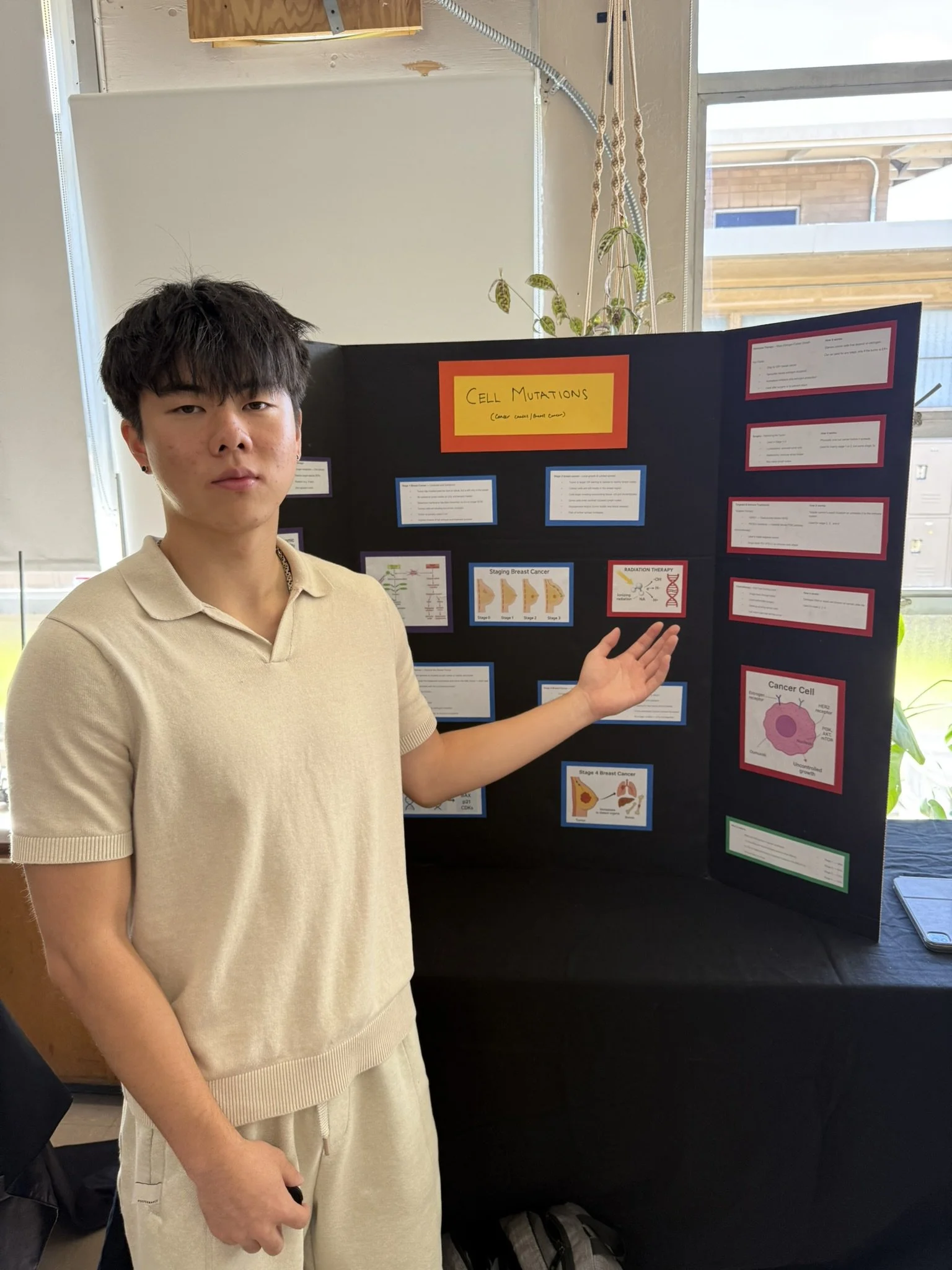
Grade 12 recently completed their Biochemistry main lesson block — a rigorous and rewarding exploration of how chemical principles shape the living world. Seniors investigated topics ranging from oxygen transport and protein folding to mutations and their biochemical effects, while also conducting lab work to deepen hands-on skills.
A major component of the block was each student’s independent research project in applied Biochemistry or Biotechnology. The block culminated in the Biochemistry Symposium, where students presented their findings in a poster session for peers, faculty, and community members — demonstrating not only scientific knowledge, but clarity of thinking, confidence, and the ability to communicate complex ideas with heart and precision.

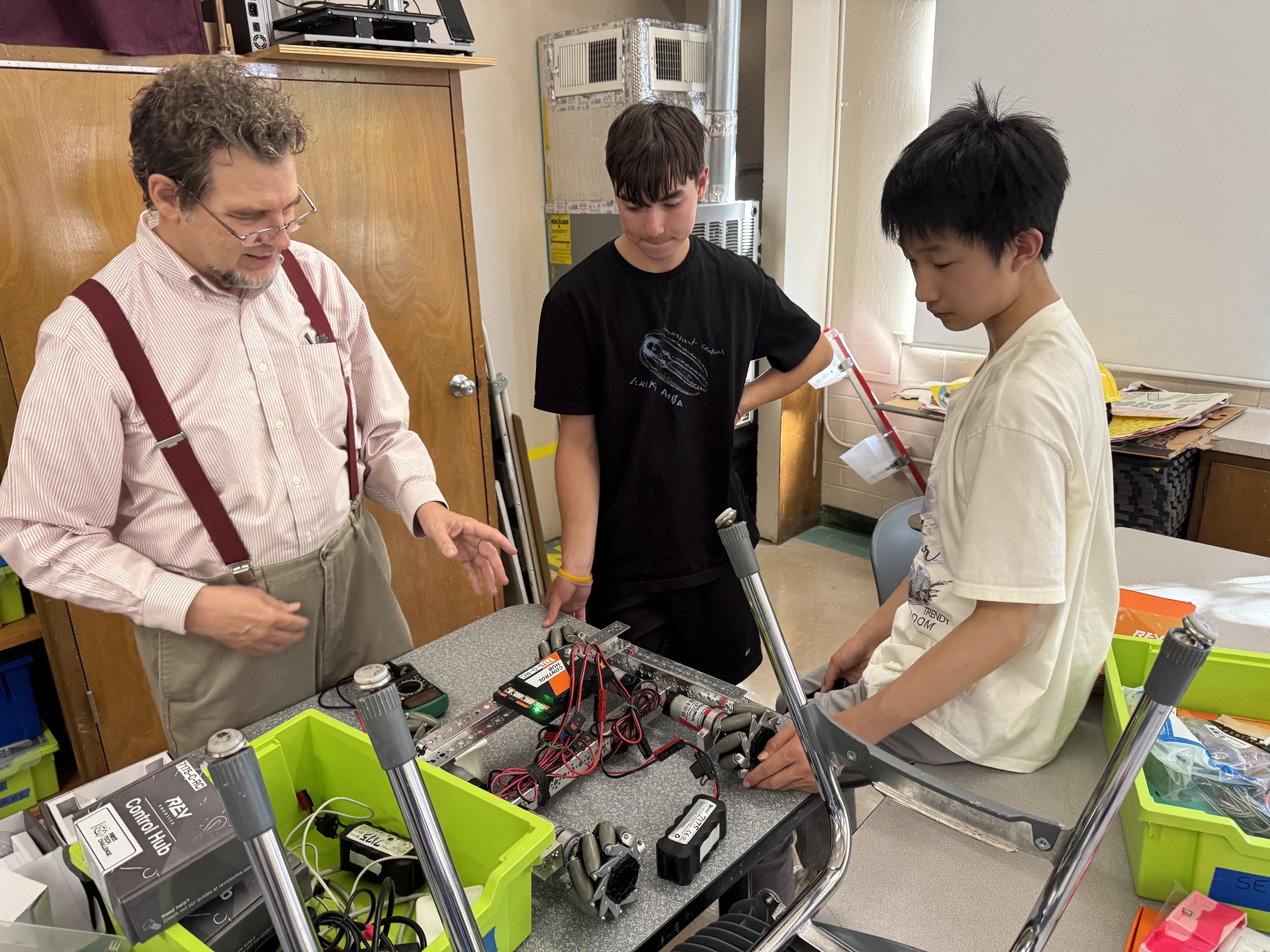
Beyond the classroom, our robotics team, the Walbots, continues to stretch engineering skills and creative problem-solving. Founded by students in 2013 and competing in the FIRST Tech Challenge, the Walbots bring a uniquely Waldorf twist to robotics, including an original Eurythmy-inspired team cheer!
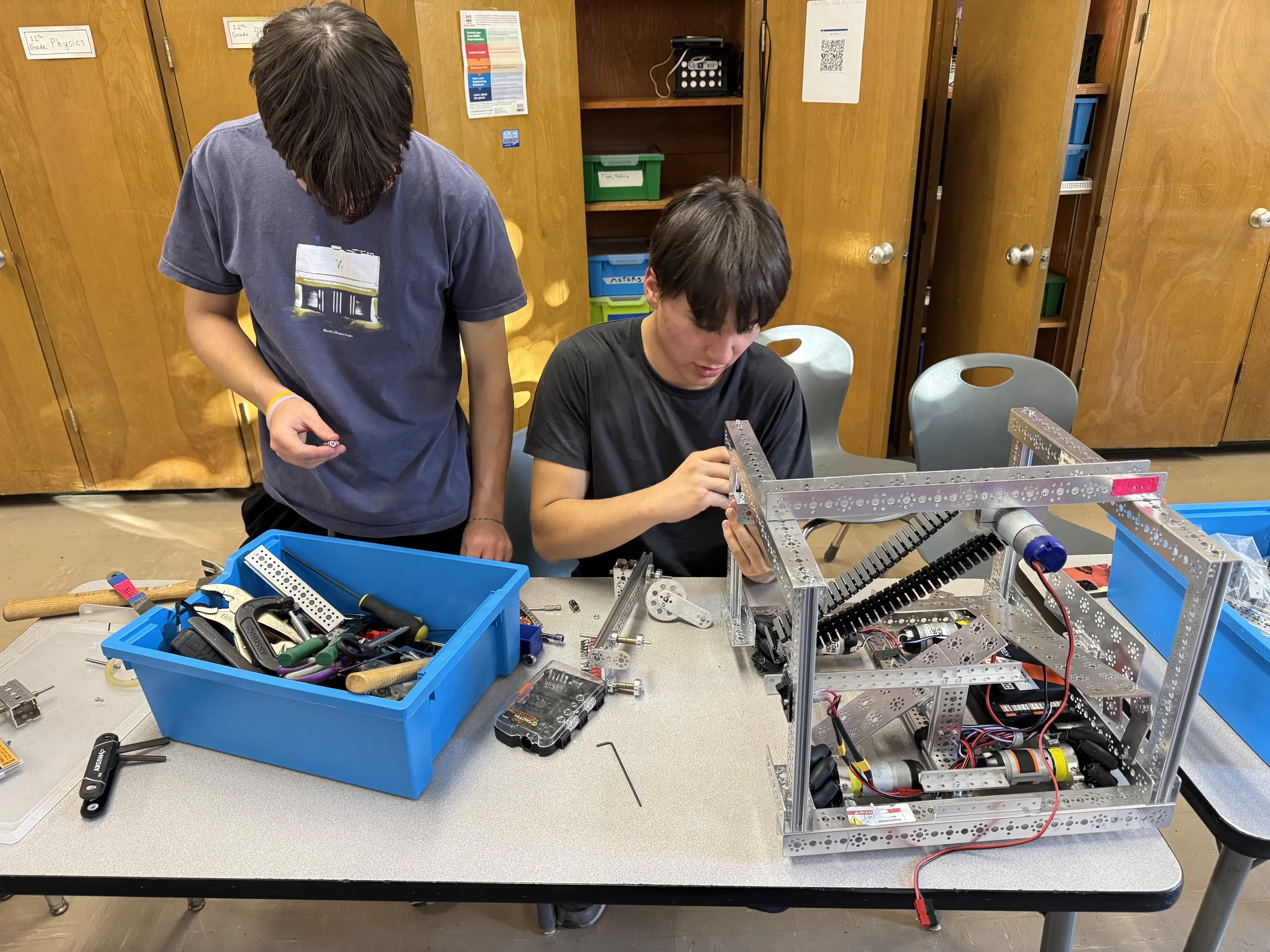
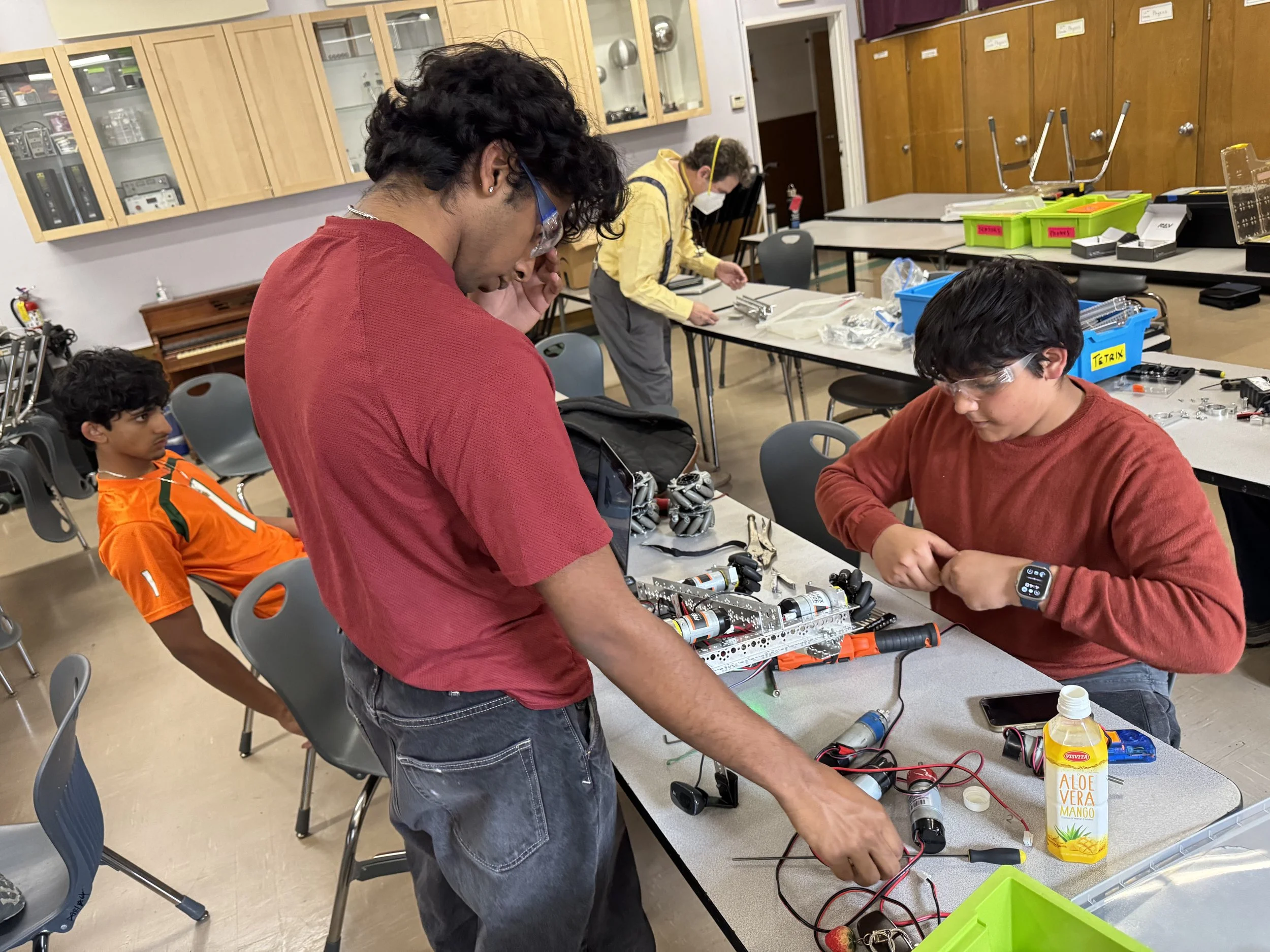
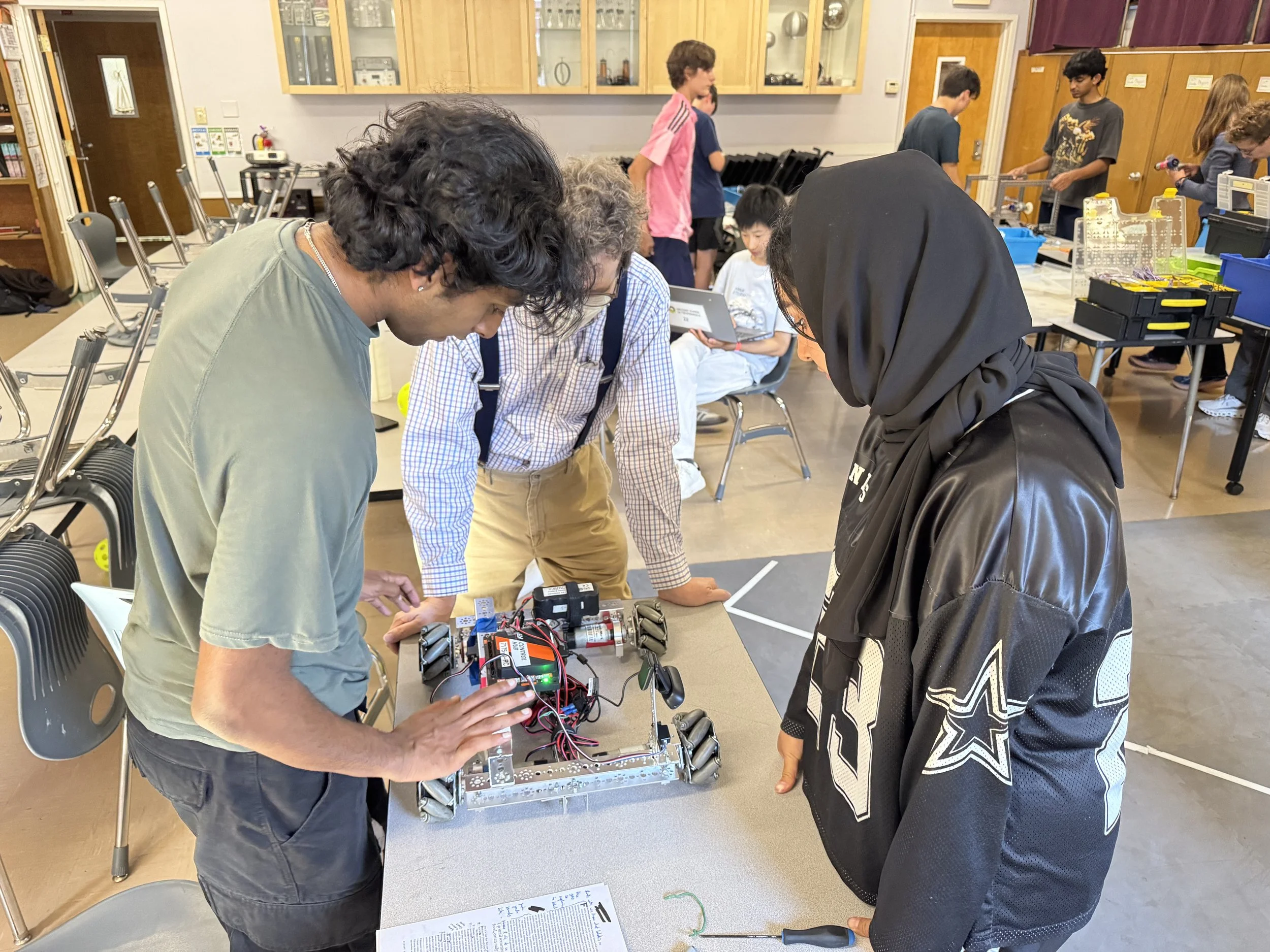
Whether investigating heat transfer, tracking the movement of oceans and atmosphere, charging themselves like human capacitors, presenting original biochemistry research, or building competition-ready robots, our high schoolers are discovering that science isn’t just something you learn — it’s something you do.
